
Willd Nest is reader-supported. We may earn a commission from qualifying purchases at no extra cost to you.
Quick Answer
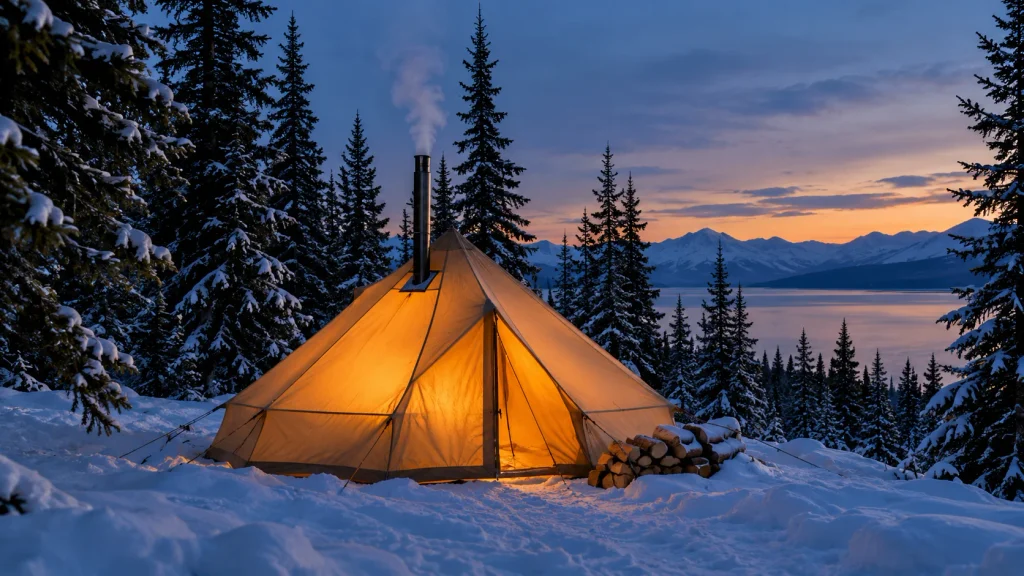
What is a hot tent? It is a camping tent designed to hold a wood-burning stove, with a fire-resistant stove jack where the chimney exits. That lets you heat the space, cook and dry gear in cold weather, but it needs careful setup, ventilation and a carbon monoxide alarm.
What You Will Learn
- A plain-English definition of a hot tent
- How a hot tent and stove actually work together
- The parts you need and the types you can buy
- How a hot tent differs from a regular or 4-season tent
- The real safety risks and how people reduce them
- Where you can (and cannot) use one
- Who should buy one, and who should wait
Why Everyone Is Asking This Question
Winter camping sounds great until the sun drops and the air bites. A regular tent blocks wind, but it does not make heat. That gap is why people search “what is a hot tent?” and why wood-stove camping keeps growing among cold-weather campers.
The idea is simple. You bring a small stove inside a tent made for it, send the smoke out through a chimney, and the space warms up. The details are where it gets serious. This guide explains the idea in plain language, shows the honest downsides, and covers safety first, so you can decide with clear eyes.
What Is a Hot Tent?
A hot tent is a tent built to be used with a wood-burning stove. The “hot” part refers to the heat source, not the tent fabric.
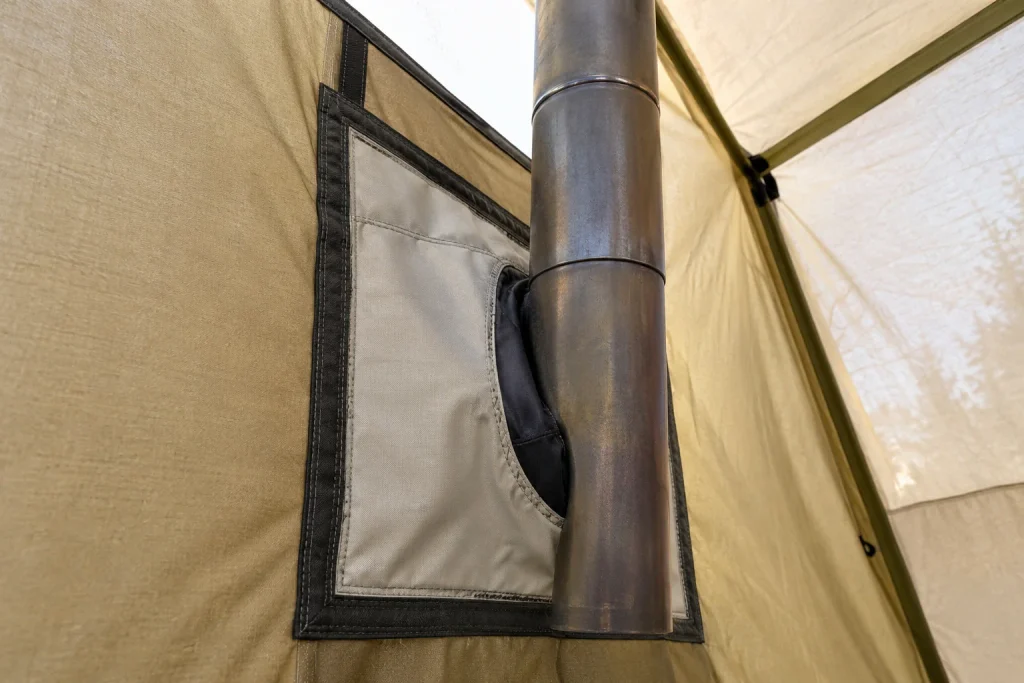
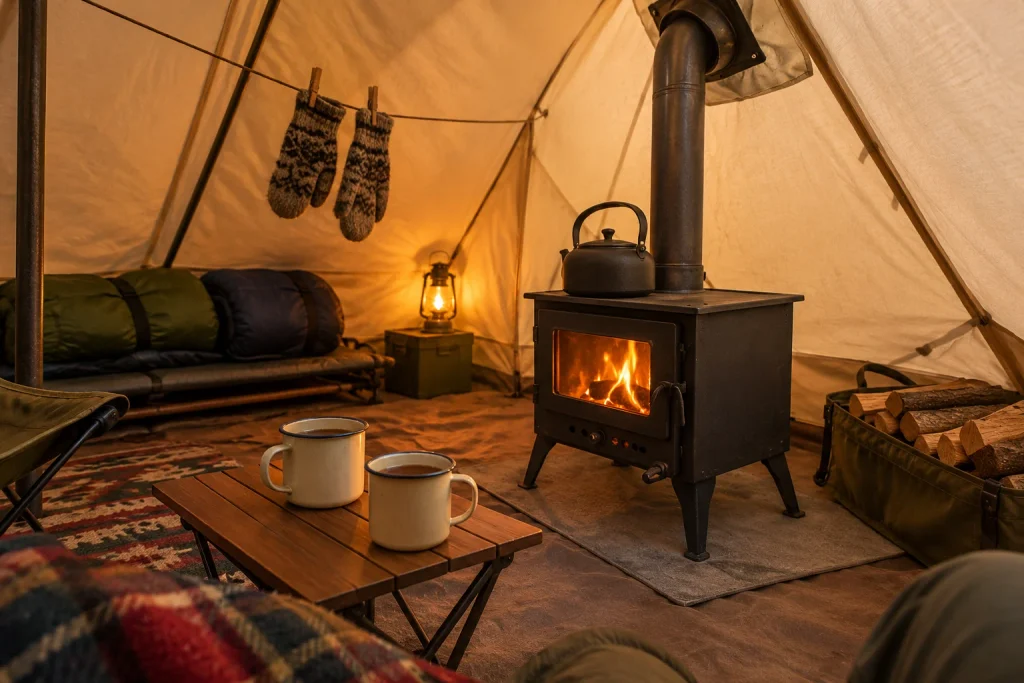
The key feature is a stove jack. This is a fire-resistant opening or sleeve in the tent wall or roof where the stovepipe passes through to the outside. Most hot tents also use heat-resistant fabric and a layout that lets you sleep away from the stove.
The style is not new. Outdoors Magic notes that the traditional tipi-style tents of the arctic forest inspired the modern hot tent. What has changed is the gear: lighter stoves, folding chimneys and tents made with stoves in mind.
A hot tent is not the same as a “winter tent.” A winter tent resists wind and snow. A hot tent is built to hold a heat source. Some do both.
How Does a Hot Tent Work?
A hot tent works by burning wood in a small stove inside the tent while a chimney carries smoke out through the stove jack. The stove radiates heat into the space, and the pipe vents the exhaust outside.
Here is the basic flow:
- Pitch the tent taut and staked, like any other tent.
- Place the stove on a heatproof base, away from the tent walls and your sleeping area.
- Run the chimney from the stove through the stove jack, with the pipe ending well above the tent.
- Burn dry wood in small, controlled loads.
- Keep air moving with vents so fresh air replaces what the fire uses.
Most hot tent stoves also have a flat top. You can heat water, cook a meal or dry gloves on it. Outdoors Magic says the stove can heat the space, cook food and even dry clothing.
Heat from a wood stove is strong but uneven. It is warm near the stove and cooler near the walls. Wind, snow and fabric all change how it feels. That is why sleeping gear still matters. White Duck Outdoors points out that you should bring warm sleeping gear even with a stove.
Parts of a Hot Tent Setup
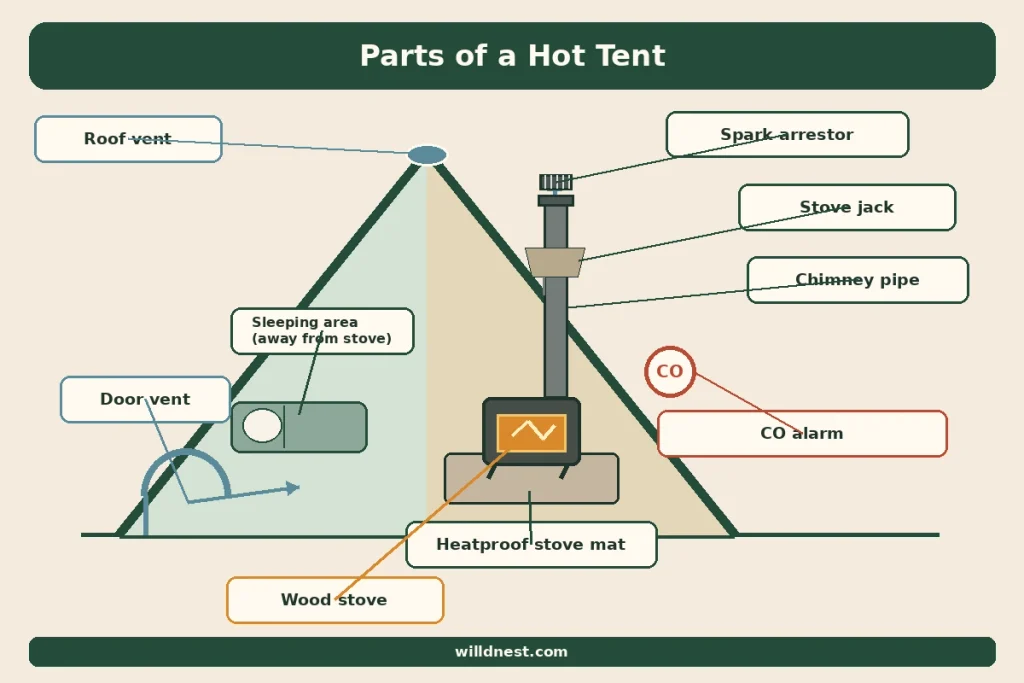
A complete hot tent setup has more pieces than a regular tent. Here is what most setups include:
- Hot tent: The shelter, ideally made for stoves, with a factory stove jack.
- Stove jack: The fire-resistant sleeve or panel the chimney passes through.
- Wood stove: A small stove sized to your tent. Larger tents need larger stoves.
- Stovepipe or chimney sections: These carry smoke out of the tent.
- Spark arrestor: A screen cap on the pipe top that helps keep sparks from reaching your roof. Stove manuals say to check it regularly, because a clogged one can cause smoke to spill into the tent.
- Heatproof mat or fire-resistant base: The stove should never sit directly on a tent floor.
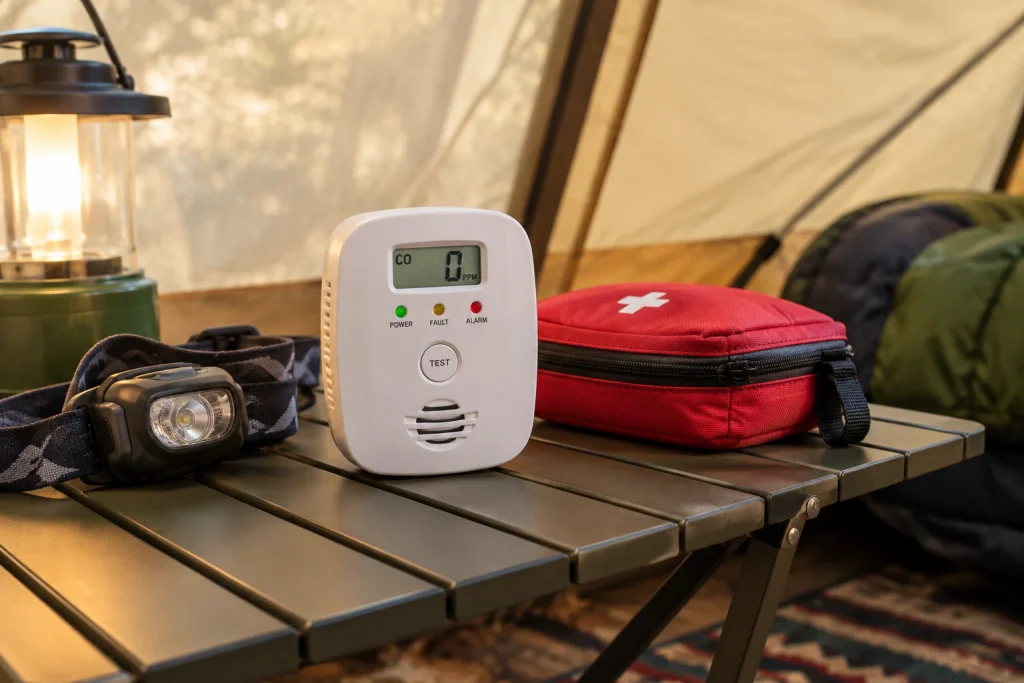
- Carbon monoxide alarm: A battery-powered alarm made for indoor use.
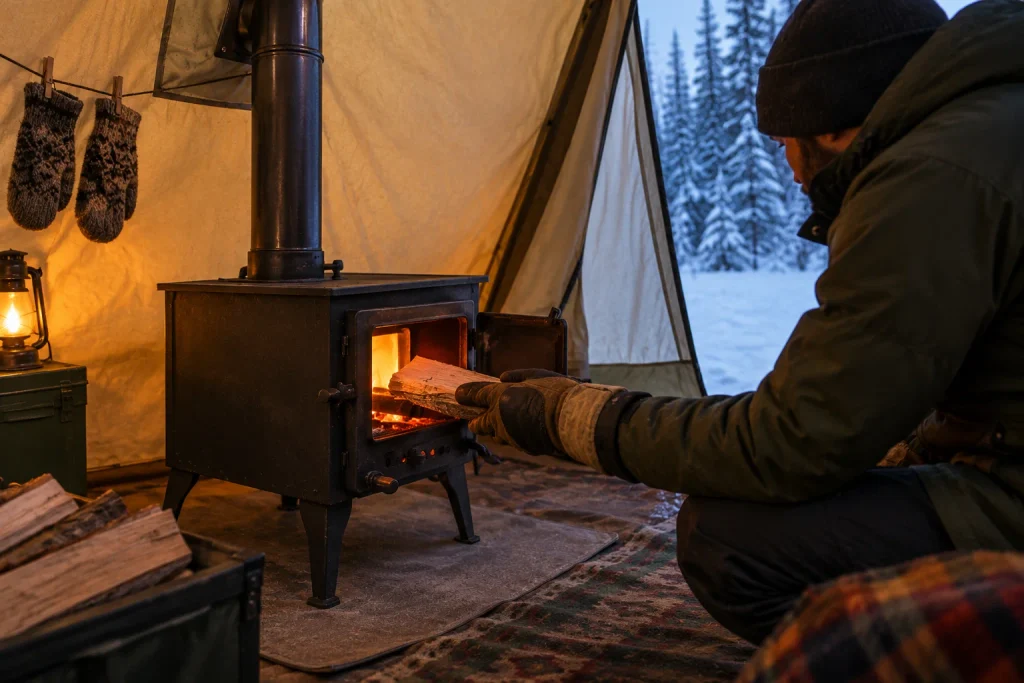
- Heat-resistant gloves: Stove parts get very hot.
- Dry firewood and a way to split it: Wood prep is part of the job.
- Fire safety gear: A small extinguisher or fire blanket is a smart addition. This is advice, not a regulation.
Types of Hot Tents
Hot tents come in a few common shapes. Pick by how you travel, not by looks.
| Type | Best for |
|---|---|
| Tipi or pyramid style | Classic shape, often lighter setups |
| Canvas wall or bell tent | Car camping, more room, more weight |
| Lightweight stove-ready shelter | Hiking in, trading space for weight |
Canvas tents are common for hot tenting because the thick, durable fabric handles stove heat. Inside the Travel Lab says a canvas tent plus a stove weighs far more than a typical backpacking setup. For some campers, that weight is worth it. For others, it ends the idea.
Whatever you choose, check the manufacturer’s stove guidance for that exact tent. A shape that looks right is not proof that it is stove-rated.
Hot Tent vs Regular Tent: What Is the Difference?
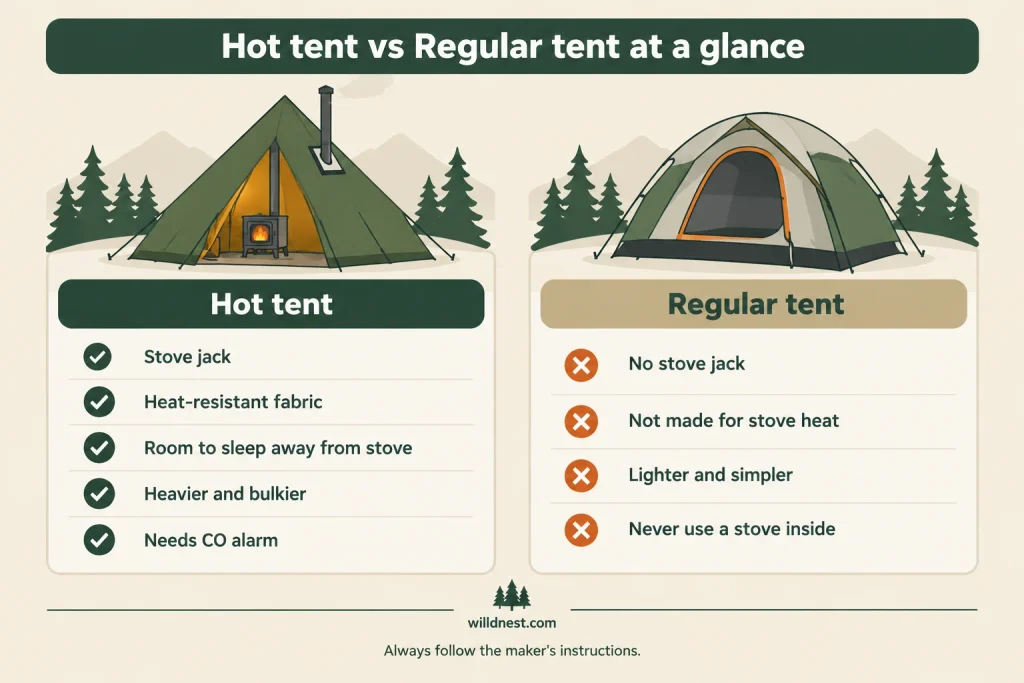
A hot tent is built to hold a stove. A regular tent is not. That one difference changes almost everything else.
- Stove jack: Hot tents have a fire-resistant opening for the chimney. Many regular winter tents do not.
- Fabric: Hot tents use fire-resistant materials that can tolerate nearby heat. Regular tent fabric can melt or burn.
- Layout: Hot tents leave space so you can sleep away from the stove.
- Weight and size: Hot tent setups are usually bulkier because of the stove and chimney.
- Cost: A quality hot tent and stove setup costs real money.
- Skill: A hot tent adds fire, ventilation and wood-handling skills on top of normal camping.
Some people ask if they can add a stove to a tent they already own. One guide says most tents can be used with a wood stove if you take the right precautions, but it is better to choose a tent engineered for it. Using a stove in a tent that was not made for one adds fire and ventilation risk. If you are unsure, do not do it.
If you simply want a comfortable tent for three-season family camping, a hot tent is probably more than you need. See our family tents guide and best family tents of 2026 for that style of camping.
Benefits of a Hot Tent
The main benefit is controllable warmth in cold weather. The rest follow from that.
- Warm living space: You can stay up, cook and relax without sitting in a cold shell.
- Dry gear: You can dry gloves, socks and hats near the stove, with care.
- Cooking on the stove: Many tent stoves have a flat top for pots and kettles.
- Dry heat: Wood stoves are known for a dry kind of warmth, which helps with damp gear.
- Longer season: Cold-weather trips become more comfortable and more doable.
Some people also enjoy the ritual: feeding the stove, boiling water, watching light flicker on the canvas. That is part of the appeal, and it is why hot tent fans can sound so passionate.
Downsides of a Hot Tent
Hot tents are heavier, slower to set up and riskier than regular tents. Know this before you spend money.
- Weight and bulk: The tent, stove and chimney take space and carrying effort. A wood-stove setup rules out ultralight packing.
- Setup time: A stove adds steps, and each step needs care.
- Firewood: You must bring wood or find legal, dry wood where you camp.
- Cost: A quality setup is not cheap.
- Risk: Fire, burns and carbon monoxide are real hazards.
- Rules: Some places restrict or ban stoves. More on that below.
Pro Tip: Before you buy anything, write down the last three cold-weather trips you took. If you would not carry a stove on those trips, a hot tent may not fit your style yet.
Are Hot Tents Safe?
Hot tents can be used safely, but only with the right gear, setup and habits. Safety is the most important part of this guide, so it comes before any buying advice.
Risk 1: Carbon Monoxide
Carbon monoxide (CO) is an odorless, colorless gas produced by burning fuel. The U.S. Centers for Disease Control and Prevention (CDC) states that fuel-burning equipment such as camping stoves, heaters, lanterns and charcoal grills should never be used inside a tent or other enclosed shelter. You can read that guidance in the https://www.cdc.gov/mmwr/preview/mmwrhtml/mm4832a1.htm The Consumer Product Safety Commission adds that people die every year from CO poisoning from portable heaters, lanterns or stoves used inside tents, and it advises not using them while sleeping in enclosed areas. See the safety instructions of Portable Heaters & Camping Equipment
A hot tent stove is different from a loose camp stove because the smoke is vented through a chimney. But the Ontario Office of the Fire Marshal says wood stoves are fuel-burning devices that can produce CO, and that improper ventilation in an enclosed space like a tent can let unsafe levels build up. Only a working CO alarm can detect it, because CO has no smell or color.
The CPSC lists symptoms: headache, dizziness, weakness, nausea, vomiting, sleepiness and confusion. Because those can look like a cold or flu, treat them seriously. Go outside into fresh air and get medical help if you or anyone in your group feels them.
Risk 2: Fire and Sparks
A hot stove next to fabric is a fire risk. Stove manuals repeat the same rules:
- Never place the stove on the tent floor or other flammable material.
- Never let the stove get so hot that the pipe glows red.
- Use the spark arrestor, and check it regularly, because buildup can block the pipe.
- Keep the pipe clear of tent fabric using the stove jack and manufacturer clearances.
- Open the stove door slowly. One manual notes that opening it quickly can draw smoke into the tent.
Wind matters too. Outdoors Magic advises guarding against wind so tent walls do not bend toward red-hot metal. Stake the tent firmly and check how it moves.
Risk 3: Burns and Sleeping With the Stove
Stove surfaces and pipes stay hot for a long time. Keep children and pets away, use heat-resistant gloves, and mark where the hot parts are.
Many manufacturer instructions say never to leave a stove burning unattended. One stove manual also says not to use the stove while sleeping. That is why many hot tent campers let the stove burn down before bed and rely on a warm sleeping bag overnight. Follow your stove’s manual, not a forum.
Your Hot Tent Safety Checklist
- Use a tent made for stoves, with a factory stove jack
- Put a battery-powered CO alarm in the tent, and test it before each trip
- Use a heatproof mat under the stove
- Keep vents open so fresh air can enter
- Keep gear, sleeping bags and fabric well away from the stove
- Never leave a burning stove unattended
- Check the spark arrestor regularly
- Keep a fire extinguisher or fire blanket within reach
- Read the manufacturer instructions for both tent and stove, and follow their clearance rules
Pro Tip: Put a CO alarm near where people sleep, not just near the stove. Test it at home first, then again at camp.
Can You Use a Hot Tent at a Campground or on Public Land?
Not always. Rules vary by place, and many fire restrictions include wood-burning stoves. Always check before you buy or travel.
The National Park Service shows how this works. On its Sequoia and Kings Canyon fire restrictions page the list of banned items under different restriction levels reads “wood and charcoal fires (including wood-burning stoves)”. In other words, when a restriction applies, a wood stove can be treated like any other wood fire.
What to check:
- Campground rules: Do they allow wood stoves inside tents? Call and ask, and get the answer in writing if you can.
- Fire restrictions: Check the land manager’s website the week you leave and again the day before.
- Fuel rules: Some areas restrict gathering wood. Bring your own if needed.
- Dispersed camping: Rules differ by agency and area. Read them for your exact spot.
If a rule is unclear, ask the land manager before you pack the stove. Our how to plan a camping trip guide walks through checking rules, permits and fire restrictions step by step.
Who Should Get a Hot Tent?
A hot tent suits campers who already camp in the cold, enjoy gear skills and can carry the weight.
A hot tent may be a good fit if you:
- Camp in cold weather several times a year
- Travel by car, sled or other methods that handle heavy gear
- Want a warm space to cook, dry gear and relax
- Are willing to learn fire and ventilation safety
- Can check local rules before every trip
You may want to wait if you:
- Are new to camping in general
- Mostly camp in warm weather
- Want the lightest possible pack
- Cannot confirm that stoves are allowed where you camp
- Do not want to manage a fire inside a tent
For a first trip, learn the basics in a regular tent at a developed campground. Then add cold-weather skills, then a stove.
What to Look For Before You Buy a Hot Tent
Buy for your trip style, your stove size and your safety needs, in that order. Here is a simple checklist:
- Factory stove jack: Prefer a tent with a built-in, fire-resistant jack. A tent without a proper stove jack is a poor match for a wood stove.
- Manufacturer stove guidance: Look for stated stove compatibility and clearance advice.
- Size: The tent should be roomy enough that you can sleep away from the stove. Larger tents need larger stoves.
- Ventilation: Look for adjustable vents and doors that let fresh air in.
- Fabric: Check that the fabric is made for heat exposure, and read care instructions.
- Weight and pack size: Be honest about how you travel.
- Weather performance: Snow load, wind and drafts matter in winter.
- Stove features: Spark arrestor, door that opens safely, and a flat top for cooking.
This is general guidance. Always follow the instructions for the exact tent and stove you buy.
First Setup Basics: How to Use a Hot Tent
Follow your manufacturer’s instructions first. These are general steps, not a replacement.
- Test at home. Pitch the tent in your yard and practice assembling the stove and pipe with everything cold.
- Pick a safe site. Choose level ground away from dry brush and overhanging dead branches.
- Pitch the tent tight. Stake it well so wind cannot push fabric toward the stove.
- Set the stove on a heatproof base. Keep it clear of walls, gear and sleeping spots.
- Install the chimney. Pass it through the stove jack, check clearance from fabric, and fit the spark arrestor. One manufacturer manual says the pipe should extend at least 6 inches above the tent ridge. Use the number in your own manual.
- Place the CO alarm. Test it.
- Start small. Use dry wood and light a modest fire first. Keep the stove door closed when you are not feeding it.
- Manage the fire. Keep vents open, tend the stove, and avoid overheating.
- Let it die down before sleeping. Rely on your sleeping bag and pad, and follow your stove’s guidance.
- Cool and clean. Let everything cool fully before packing, and clean the pipe and spark arrestor.
Hot Tent Packing Checklist
Use this list on top of your normal winter camping gear.
Shelter and stove
- Hot tent with stove jack and all stakes and guy lines
- Wood stove, chimney sections and spark arrestor
- Heatproof mat or fire-resistant base
- Stove manual and tent manual (print or save offline)
Safety
- Battery-powered CO alarm, with spare batteries
- Fire extinguisher or fire blanket
- Heat-resistant gloves
- First-aid kit
- Headlamp and extra batteries
Fuel and fire
Warmth and sleep
- Sleeping bag rated for the forecast low
- Insulated sleeping pad
- Warm layers and a waterproof shell
- Extra socks, hats and gloves
Kitchen
- Pot and kettle suited to a stove top
- Water containers
- Food that matches your cooking plan
Planning
- Fire restriction check and campground rules
- Weather forecast and a Go/No-Go plan
- Shared itinerary and offline maps
For general trip planning, see our how to plan a camping trip guide.
Common Hot Tent Mistakes and How to Avoid Them
Most problems come from skipping safety steps or buying the wrong setup. Fix them early:
- Using a tent with no stove jack. Fix: Choose a tent made for stoves.
- Skipping the CO alarm. Fix: Treat it as required gear and test it.
- Placing the stove on the tent floor. Fix: Use a heatproof base and follow clearances.
- Ignoring wind. Fix: Stake the tent well and watch how the walls move.
- Overheating the stove. Fix: Burn smaller loads and never let the pipe glow red.
- Forgetting the spark arrestor. Fix: Install it and check it regularly.
- Hanging wet gear too close. Fix: Keep clothes and fabric well clear of the stove.
- Assuming a stove is allowed. Fix: Check the rules and fire restrictions before you go.
- Skipping a test run. Fix: Practice assembly at home with everything cold.
- Relying on the stove for sleeping warmth. Fix: Bring a proper cold-rated sleep system.
FAQ
What is hot tent camping?
Hot tent camping means camping in a tent made to hold a wood-burning stove. The stove heats the space, cooks food and dries gear in cold weather, while a chimney carries smoke outside. It needs extra safety steps, including ventilation and a carbon monoxide alarm.
What is a stove jack?
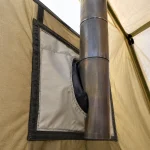
A stove jack is a fire-resistant opening or sleeve in a tent wall or roof where the stovepipe passes through. It keeps hot pipe away from regular fabric. A tent without a proper stove jack is not a good match for a wood stove.
Can any tent be a hot tent?
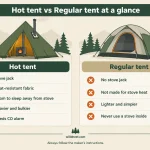
No. A hot tent is designed for a stove, with a stove jack and heat-resistant fabric. Some guides say regular tents can work with precautions, but that adds fire and ventilation risk. Choose a tent made for stoves and follow the maker’s guidance.
Are hot tents safe?
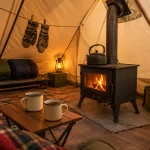
They can be used safely with the right setup and habits. The main risks are carbon monoxide, fire and burns. Use a stove-ready tent, a battery CO alarm, a heatproof base, open vents and the manufacturer’s clearances, and never leave the stove unattended.
Can you sleep with the stove burning in a hot tent?
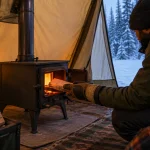
Check your stove’s manual. At least one stove manufacturer says not to use the stove while sleeping, and many manuals say never to leave a burning stove unattended. Many campers let the fire die down and rely on a warm sleeping bag overnight.
Do hot tents need a carbon monoxide alarm?
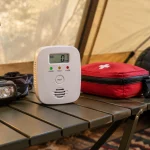
Yes, treat a battery-powered CO alarm as essential. Carbon monoxide has no smell or color, and the Ontario Fire Marshal notes that only a working CO alarm can detect it. Test the alarm before every trip.
Can you use a hot tent at a campground?
Sometimes. Campground and land manager rules vary, and fire restrictions can include wood-burning stoves. Call the campground or check the agency website before you go, and get the answer in writing if you can.
Is a hot tent worth it for beginners?
Usually not for a first trip. A hot tent adds weight, cost, fire skills and safety work. Learn basic camping and cold-weather skills first, then consider a hot tent if you camp in the cold often.
Final Verdict: Is a Hot Tent Right for You?
A hot tent is a warm, comfortable way to camp in the cold, if you accept the weight, the skill and the safety work. It is a specialist shelter, not a shortcut.
If you camp in winter often, can carry the gear and will follow the safety rules, a hot tent can transform cold trips. If you are new to camping or mostly camp in mild weather, start with a regular tent and good sleeping gear. For that kind of camping, see our best family tents of 2026 and our family tents guide.
Whatever you choose, make safety the first step, not the last.
Last reviewed: October 20, 2026