
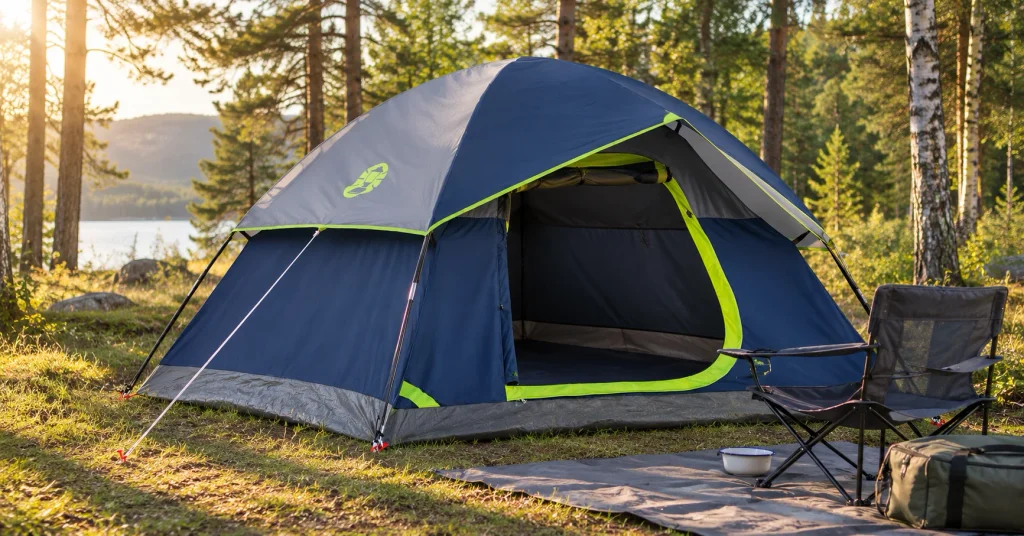
At a Glance:
- Floor size: 9 ft x 7 ft (about 63 sq ft, calculated from the listed footprint)
- Center height: 4 ft 11 in
- Capacity: 4 person, fits 1 queen-size air bed
- Setup: about 10 minutes
- Wind rating: 35 mph (manufacturer)
- Warranty: 1-year limited
Quick Answer
Looking for budget-friendly family tents that go up without a fight? The Coleman Sundome 4-Person is a 9 x 7-foot dome with an included rainfly, taped seams, and a tub-like floor. It fits one queen air bed comfortably, but at 4 ft 11 in tall, nobody is standing up inside.
A Quick Note on This Listing
Two small inconsistencies are worth flagging before the breakdown.
First, the dimension diagram in the product photos shows a tent graphic labeled “Sundome 2P,” while the numbers beside it (9 ft wide, 7 ft deep, 4 ft 11 in tall) and the “room for 4 people” icon match the 4-person spec in the listing text. We’re using those numbers.
Second, the listing text says the frame withstands “35+ mph” winds, while the weather graphic says “up to 35 mph.” We treat 35 mph as the planning number.
Coleman also doesn’t publish the tent’s weight, packed size, pole material, fabric denier, or a hydrostatic head rating in this listing. Where those would normally appear, we say so instead of guessing.
What We Like / What Could Be Better
What We Like:
- Simple dome design with continuous, snag-free pole sleeves, and a listed setup time of about 10 minutes
- Coleman’s WeatherTec system: tub-like floor, welded corners with inverted seams, and taped seams on both the rainfly and the tent body
- Two windows plus a ground vent for airflow, and two awnings that shade the door and window
- An E-Port for routing a power cord inside without leaving a door open
- Gear pockets, a 1-year limited warranty, and sizes from 2 to 6 person, so the same design scales with your family
What Could Be Better:
- At 4 ft 11 in, the center height means no adult stands upright inside
- The “4-person” rating is a sleeping-bags-only layout, so real family capacity is closer to a queen air bed plus a couple of kids
- Weight, packed size, pole material, denier, and hydrostatic rating aren’t published
- The product photos show one main front door, so plan for a single main entrance and confirm rear details with the seller
What Actually Matters in Family Tents
Before breaking the Sundome down feature by feature, here’s what we weigh most heavily in family tents at any price:
- Real floor area vs marketed capacity: The number on the box rarely matches how many people fit once air beds and bags are inside.
- Setup speed with kids underfoot: A tent you can pitch in ten minutes is a very different evening than one that takes forty-five.
- Weather protection you can verify: Floor design, seam construction, and a rainfly tell you more than the word “weatherproof.”
- Standing room reality: Listed center height is the honest number, no matter how roomy the product photos look.
- Small comforts that matter on night two: Pockets, ventilation, and a way to power a fan or lantern.
Feature-by-Feature Breakdown
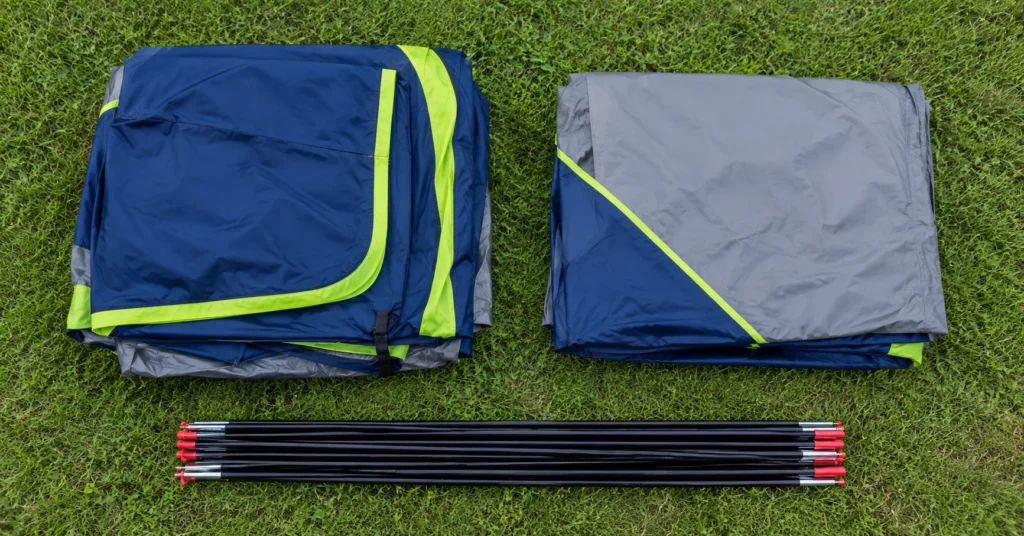
What’s in the Box
- Confirmed by the listing: Tent body, rainfly
- Not itemized: Poles, stakes, guylines, and carry bag
The listing states that the tent includes a rainfly and shows the tent’s poles in its setup photos, but it doesn’t itemize stakes, guylines, or a carry bag. If those matter for your first trip, confirm the contents with the seller before you buy.
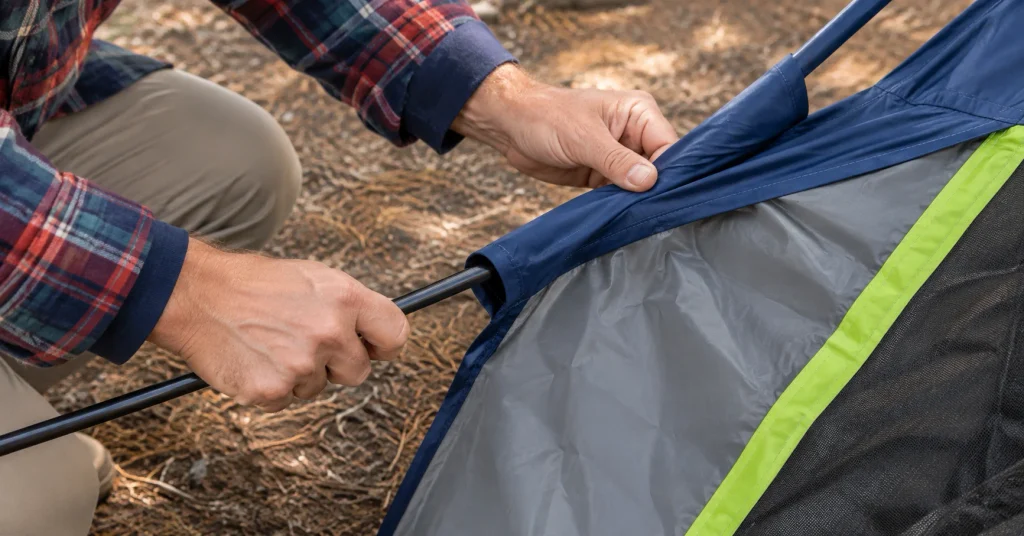
Setup & Takedown
- Design: Freestanding-style dome with continuous pole sleeves
- Sleeves: Snag-free, per Coleman (continuous, no catching)
- Listed setup time: About 10 minutes
This is where the Sundome earns its reputation as a first-tent pick. Coleman’s photos show the pole sliding through one long, continuous sleeve instead of stopping and starting at seams, which is what usually causes a pole to snag halfway through. That’s a real quality-of-life detail when you’re pitching in fading light with a toddler asking for a snack.
The listing doesn’t say whether one person can pitch it alone. Two people will move faster, especially when you’re bending the poles into place at the corners.
Pro Tip: Pitch it once in the backyard before your first trip. Ten minutes is a lot more like ten minutes when you already know which pole goes where.
Peak Height & Standing Room
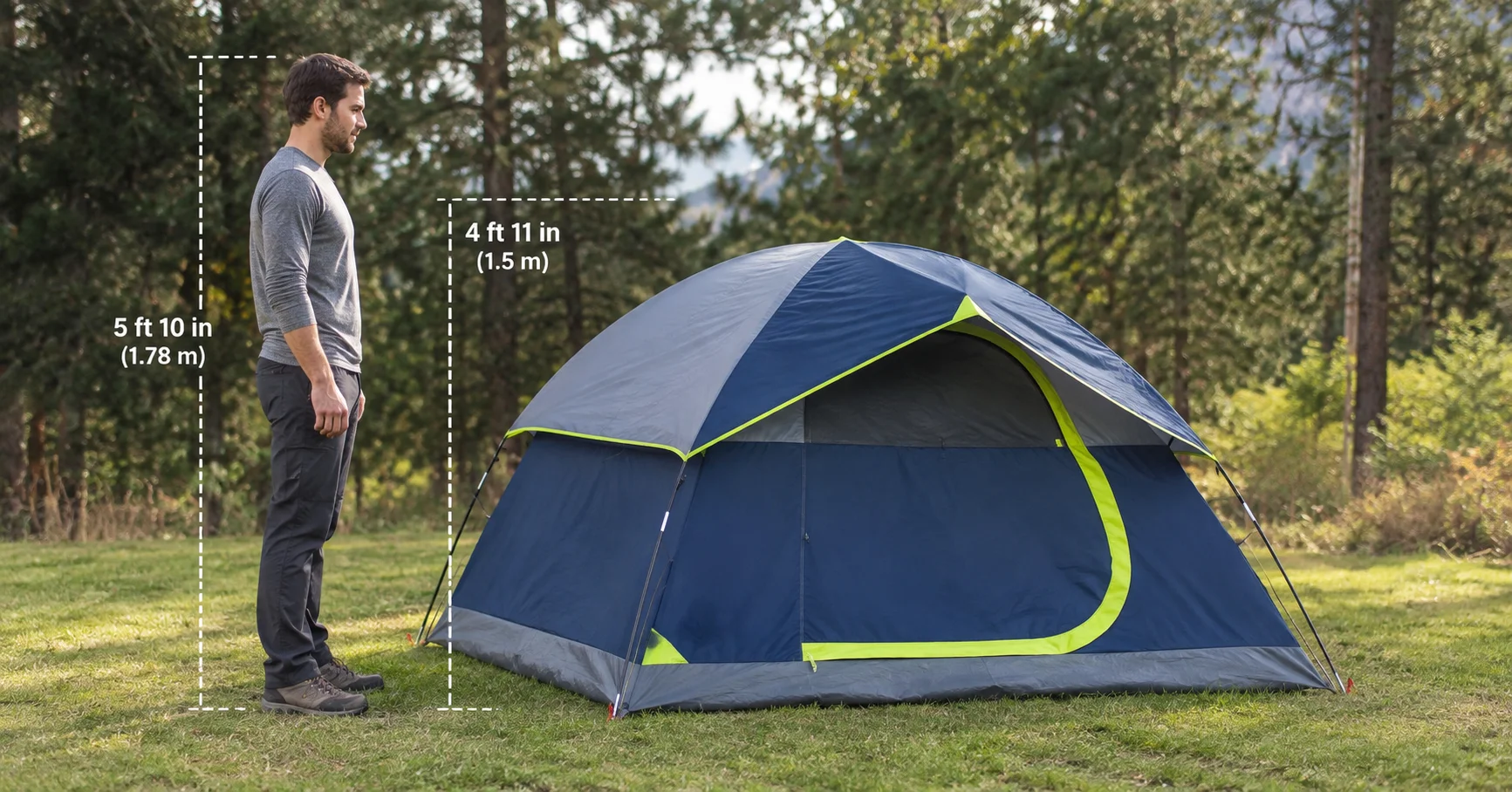
- Center height: 4 ft 11 in (59 inches)
- Shape: Classic dome, sloping to all sides
This is the single most important number on the page, so we’ll say it plainly: at 4 ft 11 in, no adult stands upright inside the Sundome, and most teens won’t either. Children under about 4 ft 6 in can move around near the center, but everyone else is kneeling, crawling, or sitting.
That’s normal for a budget dome tent, and it isn’t a flaw if you know it going in. It does change how you camp: you get dressed sitting down, and rainy afternoons are spent lying on your sleeping bags or in camp chairs under the awning, not standing in the tent.
Floor Area & Sleeping Capacity
- Footprint: 9 ft x 7 ft (about 63 sq ft)
- Marketed capacity: 4 person
- Coleman’s own guidance: Fits 1 queen-size air bed
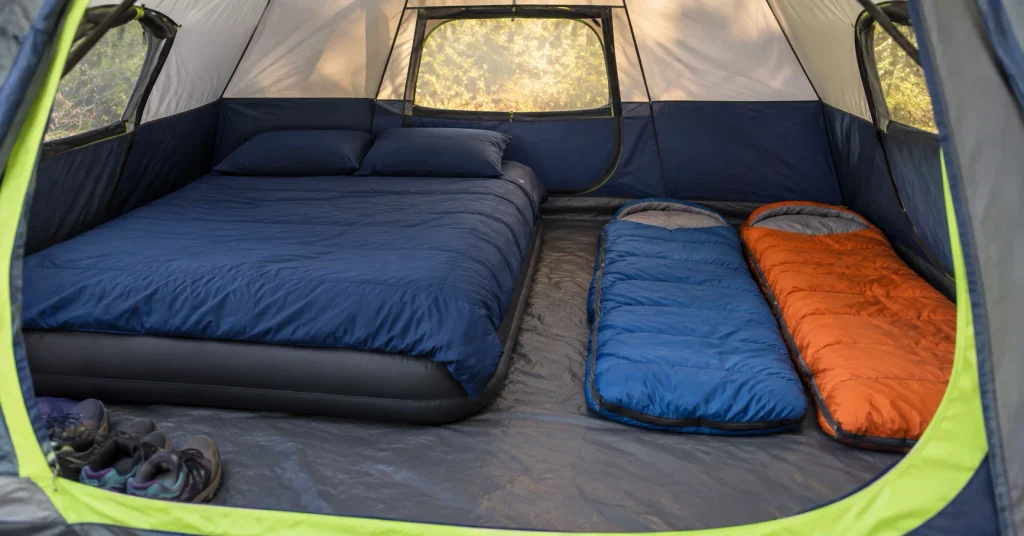
Coleman’s sizing graphic shows four sleeping bags lying side by side across the 9-foot width. That’s a real way to fit four people, but it leaves no floor room for duffels, shoes, or a walkway.
Here’s the more useful math for a family. A standard queen air bed is roughly 60 x 80 inches. Set it along one wall of the 108 x 84-inch floor and you have a strip about 48 inches wide left over, enough for two narrow sleeping pads or a pair of kids’ sleeping bags. That’s a realistic family of four for a weekend: two adults on the queen bed, two kids beside them, with bags stashed under the awning or in the car.
| Spec | Detail |
|---|---|
| Footprint | 9 ft x 7 ft (about 63 sq ft) |
| Best Realistic Fit | 1 queen air bed + 2 kids on pads |
Pro Tip: If you’d rather keep gear inside, size up to Coleman’s 6-person Sundome, which uses the same design with more floor.
Doors
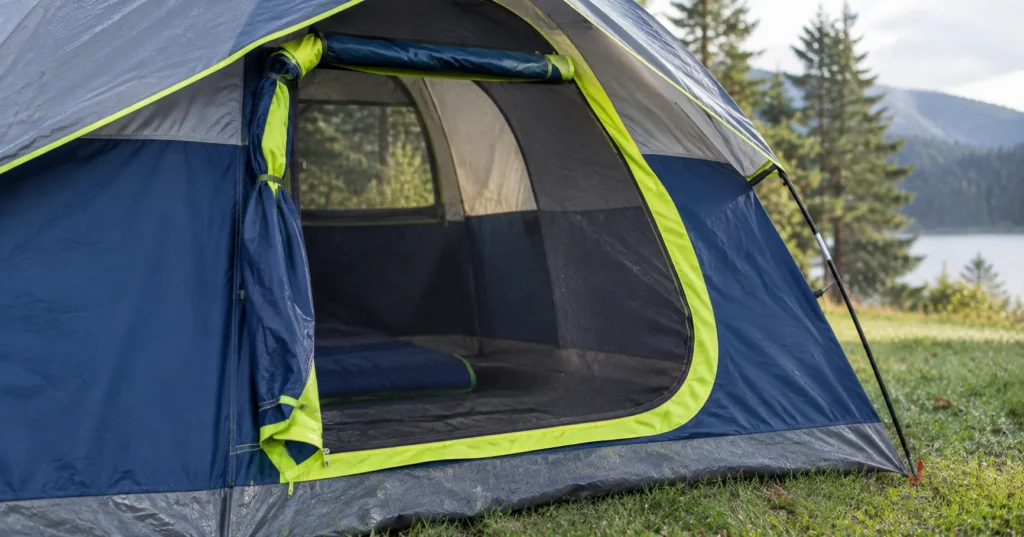
- Main door: Large D-shaped door with lime-green zipper trim, shown on the front panel
- Door count: Not stated in the listing text; the product photos show one main front door
The listing doesn’t state a door count, and the product photos only show the front. A large D-shaped door is easy to step through, though at this height you’ll be ducking either way. If having two exits matters to your family, confirm the layout with the seller before ordering.
Windows & Mesh
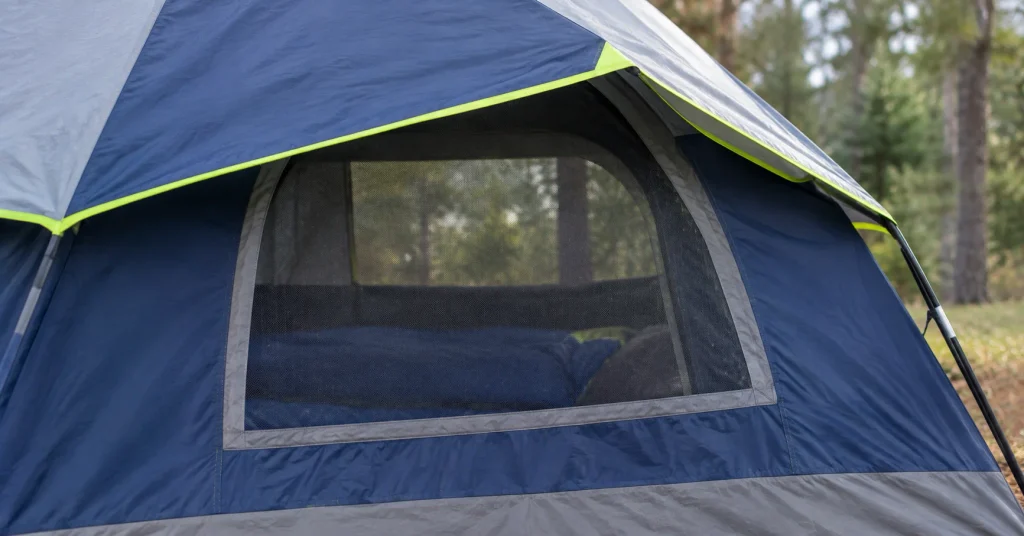
- Windows: 2
- Covered by: Rainfly awning over the window
The Sundome has two windows, and the awning above them keeps rain off the mesh, which lets you leave them open longer on a drizzly night. With only two windows and one ground vent, cross-breeze is decent rather than exceptional, so plan on cracking the door in hot weather.
Ventilation
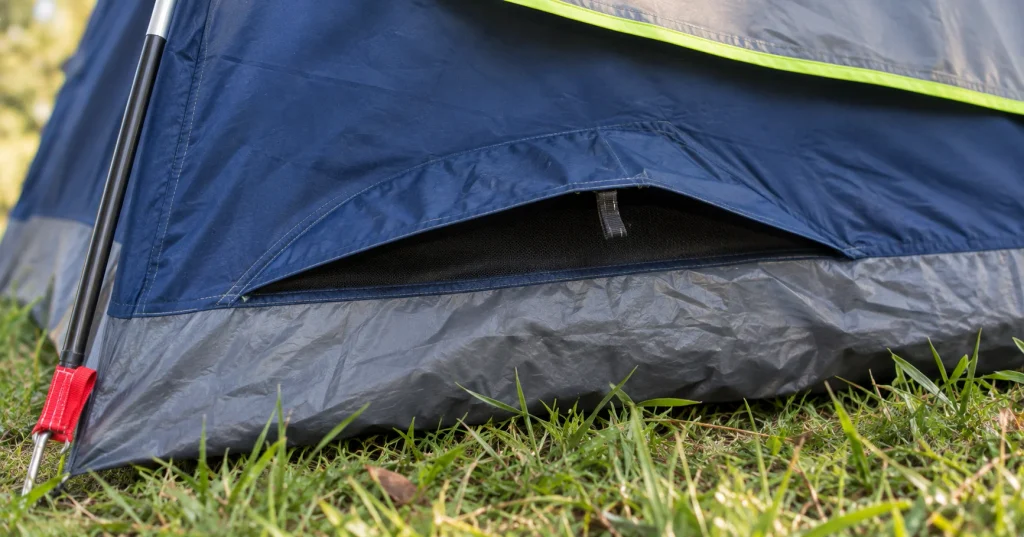
- Ground vent: 1
- Windows: 2
The ground vent is a small opening at the base of the tent that lets air flow in low and out through the windows higher up, which is the basic recipe for reducing morning condensation. Coleman calls the whole setup “advanced ventilation”; for a compact dome, it’s a sensible, no-frills layout. On humid nights, a partly open door helps a lot.
Awnings & Gear Storage
- Awnings: 2, over the door and over the window
- Storage: No vestibule; the awnings shelter the entrance
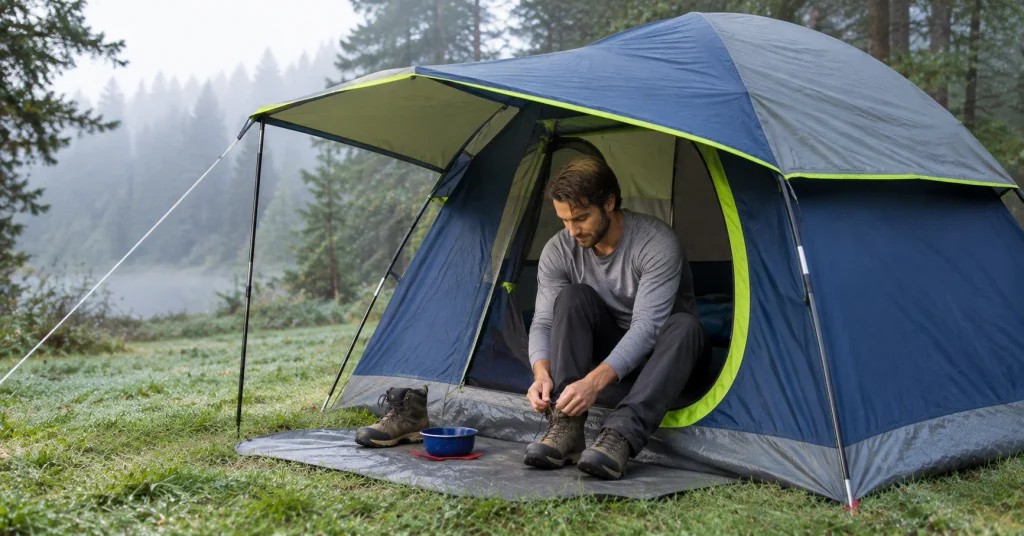
The Sundome doesn’t have a true vestibule, but its two awnings cover the door and a window, giving you a dry-ish spot to sit and lace up boots, exactly like the product photo. Pair it with a small ground sheet and you have a mud-free landing zone. Just don’t expect to leave duffels out overnight in the rain.
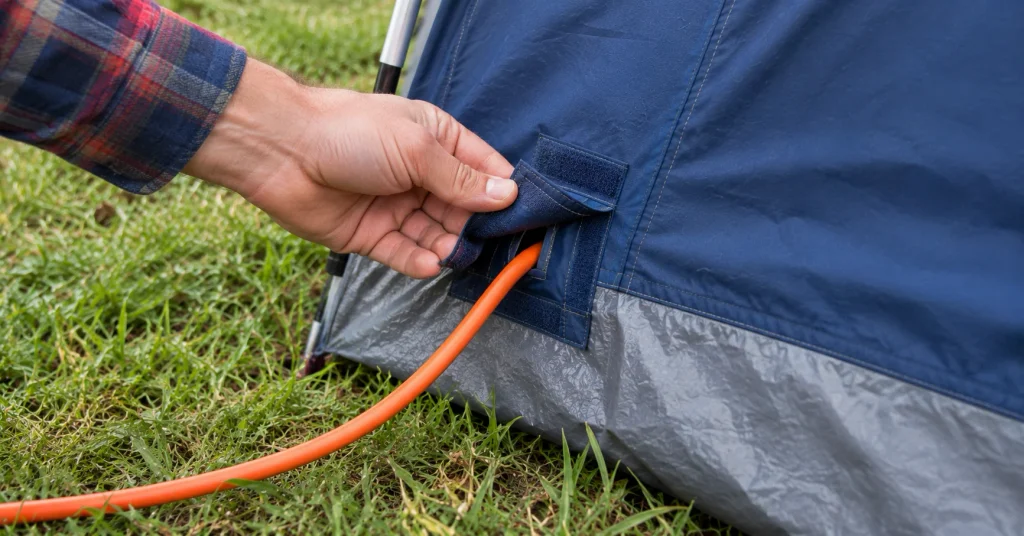
E-Port (Power Cord Access)
- Feature: E-Port for bringing an electrical cord inside
- Why it matters: Run a cord in without leaving a door or window open
If you’re camping at a site with electrical hookups, the E-Port lets you run an extension cord to a fan, lantern, or phone charger without unzipping anything. That’s a small feature that pays off on buggy or rainy nights.
Pro Tip: Use an outdoor-rated extension cord, keep connections up off the wet ground, and keep any heat source well away from the tent fabric.
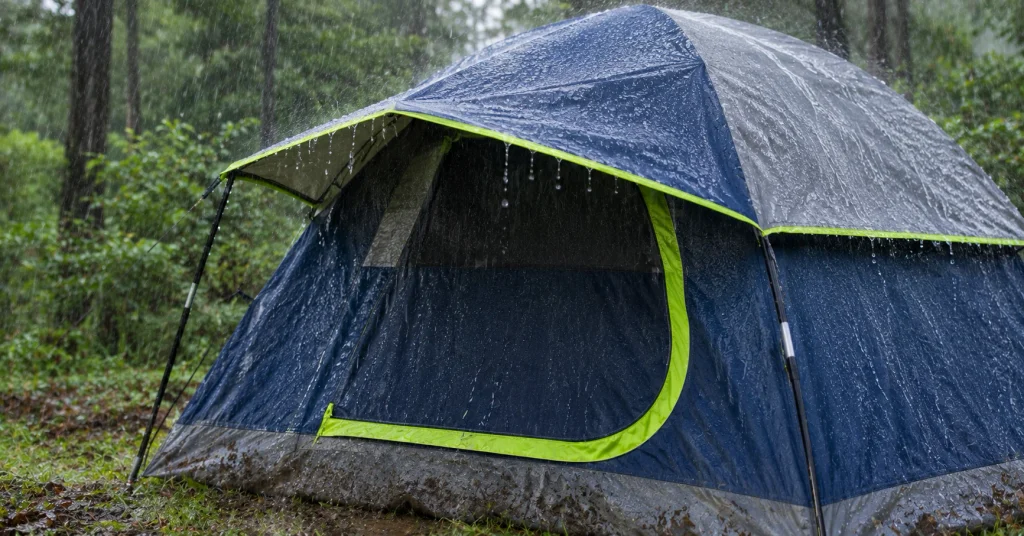
Rain & Weather Protection
- System: Coleman WeatherTec
- Floor: Tub-like, helps keep water outside
- Corners: Welded corners with inverted seams
- Seams: Taped on both the rainfly and the tent body
- Rainfly: Included
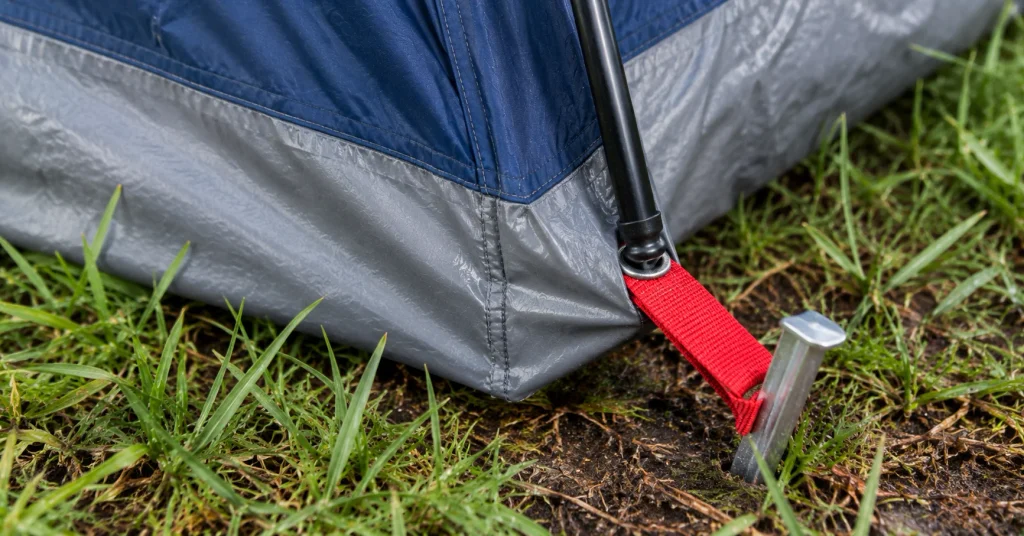
Coleman doesn’t publish a hydrostatic head rating for the Sundome, so we can’t put a millimeter number on it. What the listing does tell you is how the tent is built: a tub-like floor that curves up the walls so puddles stay below the seams, welded corners with inverted seams that keep stitching out of the wet, and taped seams on both the fly and the body. Those are the same three weak points that cause leaks on cheaper tents, and covering all of them is a sign the design takes rain seriously.
Pro Tip: Put a tarp under the tent that’s slightly smaller than the floor. A tarp that sticks out past the edges catches rain and funnels it underneath you.
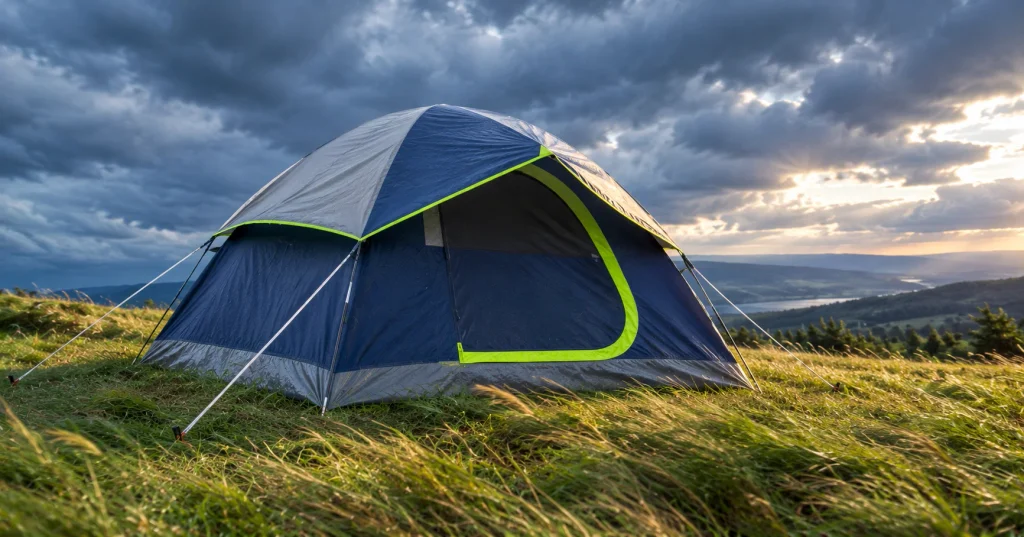
Wind Resistance
- Frame rating: Withstands up to 35 mph (per Coleman)
- Shape: Low, rounded dome with two crossing poles
Low and rounded is a good shape for wind, and Coleman rates the frame for up to 35 mph. That’s the number to plan around, even though the listing text says “35+.” Stake out every corner, use the guylines, and pitch with the low back end into the wind. In gusts stronger than that, packing up is smarter than testing the claim.
Storage Pockets
- Gear pockets: Included (count and placement not published)
- Best for: Sunglasses, headlamps, phones, and keys
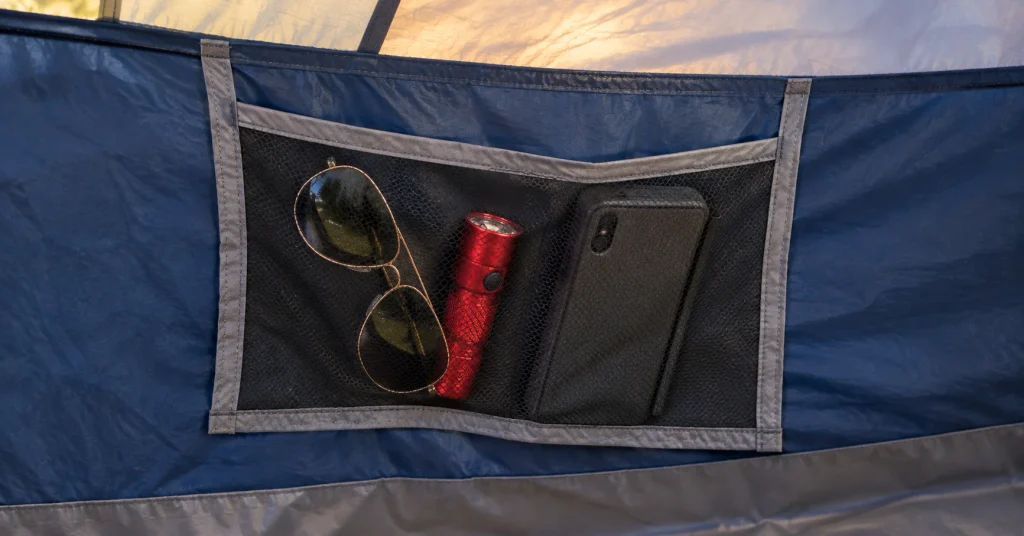
Coleman’s photos show a mesh gear pocket holding sunglasses and small items, though the listing doesn’t say how many pockets there are or where they sit. For a tent this compact, plan on a small hanging organizer if your family carries a lot of small gear.
Build Quality & Materials
- Fabric: Polyester (denier not published)
- Construction: Welded corners, taped seams, tub-like floor
- Warranty: 1-year limited
The listing gives us the fabric type (polyester) but not the denier, so we can’t say how thick it is. What we can point to is construction: welded corners and taped seams are the details that separate a tent that keeps its shape from one that starts leaking after a few trips. The 1-year limited warranty is a reasonable backstop for the price tier.
Who This Tent Is (and Isn’t) For
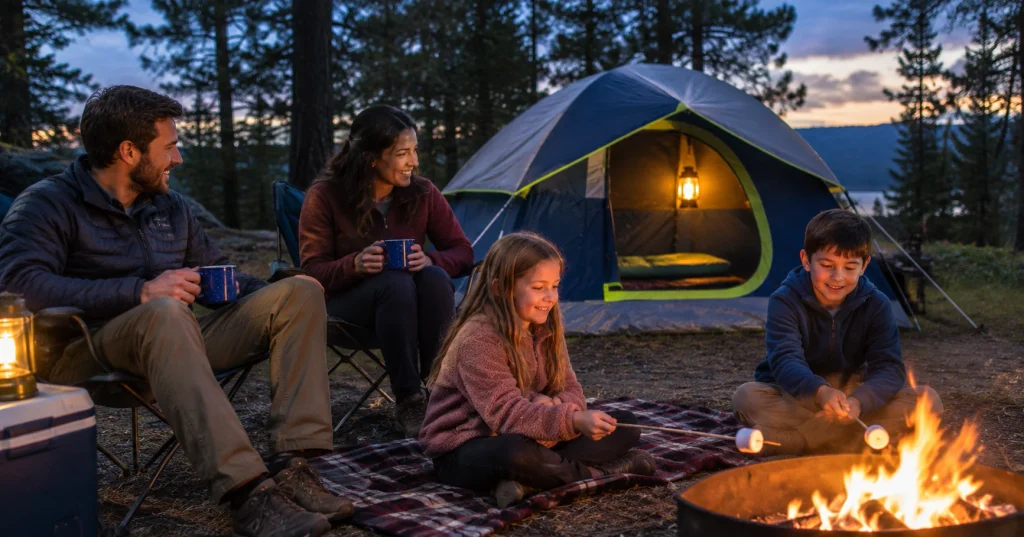
The Sundome 4-Person is a strong fit for first-time campers and budget-minded families who want a simple, weather-aware dome for weekend trips. Its quick setup, WeatherTec construction, and easy pole sleeves make it a low-stress way to start camping with kids. It also suits backyard sleepovers, festival weekends, and second-tent duty.
It’s a weaker fit if you want standing room, a second door, or space to keep gear inside. Families of four who camp for a week at a time, or who bring air beds for everyone, will be happier in a larger cabin-style tent. Among family tents, this is a compact starter, not a basecamp.
Why Trust This Guide
This review is based on Coleman’s published listing details and product photos for the Sundome 4-Person, including its dimensions, center height, WeatherTec construction, and warranty. Where the listing is inconsistent or silent (the “2P” label on the diagram, the “35+” wind claim, weight, packed size, pole material), we say so instead of filling the gap with a guess.
Buying Guide: Is the Coleman Sundome Right for Your Family?
Choosing among family tents starts with an honest look at how your family actually camps. These are the questions that matter most for the Sundome.
How Many People Will Really Sleep in It?
For two adults and two kids, the 9 x 7-foot floor works with a queen air bed and two small sleeping bags. For four adults or teens, treat it as a squeeze.
Does Anyone Need to Stand Up?
At 4 ft 11 in, nobody over about 4 ft 6 in stands comfortably. If standing room matters, look at a taller cabin or dome model.
How Much Rain Will You Face?
The tub-like floor, welded corners, and taped seams give it solid rain-ready construction, but there’s no published hydrostatic rating, so put a tarp under it and pitch on higher ground.
Do You Need Power at Camp?
The E-Port is a real convenience if you use a fan or lantern on hookups, and unnecessary if you camp off-grid.
How Much Gear Do You Bring?
With one queen bed and two kids, there’s little room for duffels, so plan on using the awning area or the car for storage.
Common Mistakes Buyers Make
The most common mistake is buying by the “4-person” label. Coleman’s own graphic shows four sleeping bags side by side with no gear room, which is a lot tighter than most families picture.
Final Verdict
Among budget-friendly family tents, the Coleman Sundome 4-Person is a proven, sensible starter: simple snag-free setup, WeatherTec construction, two windows, a ground vent, and an E-Port for power. Just go in knowing you’ll be sitting, not standing, and that “4-person” really means a queen air bed plus two kids. For weekend trips and first-time campers, it’s an easy way to get out the door.
As an Amazon Associate, we earn from qualifying purchases.
Frequently Asked Questions
Is the Coleman Sundome 4-Person a good family tent?
Yes, for weekend trips and first-time campers. It fits a queen air bed plus two kids, sets up in about 10 minutes, and has taped seams and a tub-like floor, though you can’t stand upright inside.
How many people actually fit in the Coleman Sundome 4-Person?
Coleman’s graphic shows four sleeping bags side by side, which leaves no room for gear. A more comfortable family layout is one queen air bed plus two kids on sleeping pads.
Can you stand up in the Coleman Sundome 4-Person?
No. The center height is 4 ft 11 in, so adults and most teens will be kneeling or sitting.
How long does the Coleman Sundome take to set up?
Coleman lists about 10 minutes. Continuous, snag-free pole sleeves help the poles slide through without catching.
Is the Coleman Sundome waterproof?
It uses Coleman’s WeatherTec system: a tub-like floor, welded corners with inverted seams, taped seams on the rainfly and body, and an included rainfly. Coleman doesn’t publish a hydrostatic head rating.
How does the Sundome compare with other family tents?
It’s a compact, budget-friendly starter. Larger family tents give you standing room, extra doors, and gear space, while the Sundome trades those for simple setup and easy carrying.
How much wind can the Coleman Sundome handle?
Coleman rates the frame for up to 35 mph. Stake all corners, use the guylines, and pack up if gusts exceed that.