
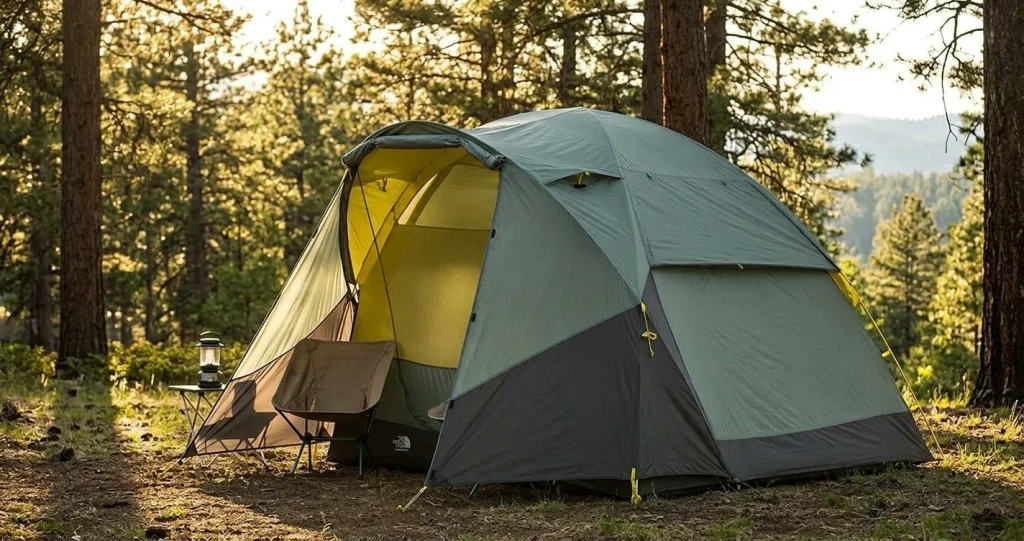
At a Glance:
- Floor area: 58.13 sq ft
- Total weight: 13 lb
- Trail weight: 11 lb 11 oz
- Vestibule area: 27.6 sq ft
- Capacities available: 4P, 6P, 8P
- Doors: 2
Quick Answer
Shopping among family tents and want something built to last? The North Face Wawona 4 pairs near-vertical walls with a genuinely large front vestibule and premium DAC aluminum poles. It trades a bit of peak height and full-storm coverage for excellent gear storage and durability a strong pick for couples or small families who camp mostly in fair-to-moderate weather.
What We Like / What Could Be Better
What We Like:
- Sturdy DAC aluminum poles and a 150-denier floor built for years of regular use
- Large front vestibule (27.6 sq ft) big enough for a gear bin or duffels
- Two doors, so you’re not climbing over anyone to get out at night
- Generous mesh paneling and roof vents for strong airflow
- Reasonable 13-pound total weight with an easy-loading duffel-style bag
What Could Be Better:
- The partial-coverage rainfly relies on a waterproof lower tent body rather than full double-wall protection, which is less storm-ready than some competitors
- Window flaps can only be adjusted from outside the tent
- Tall profile and long poles mean setup goes more smoothly with two people than one
What Actually Matters in a Family Tents
Before breaking the Wawona 4 down feature by feature, here’s what we weigh most heavily for any family tents:
- Real floor area vs marketed capacity: The number on the box rarely matches how many people comfortably fit once mattresses and bags are inside.
- Setup speed with kids underfoot: A tent that takes 45 minutes to figure out is a very different experience than one you can pitch in 15.
- Weather protection that’s actually tested: Denier rating, rainfly coverage, and floor construction tell you far more than marketing copy.
- Storage that keeps chaos contained: Pockets, vestibules, and gear lofts matter more once you’re three days into a trip with kids’ shoes everywhere.
- Build quality that survives repeated trips: Pole material and fabric weight are the real indicators of how long a tent will actually last.
Feature-by-Feature Breakdown
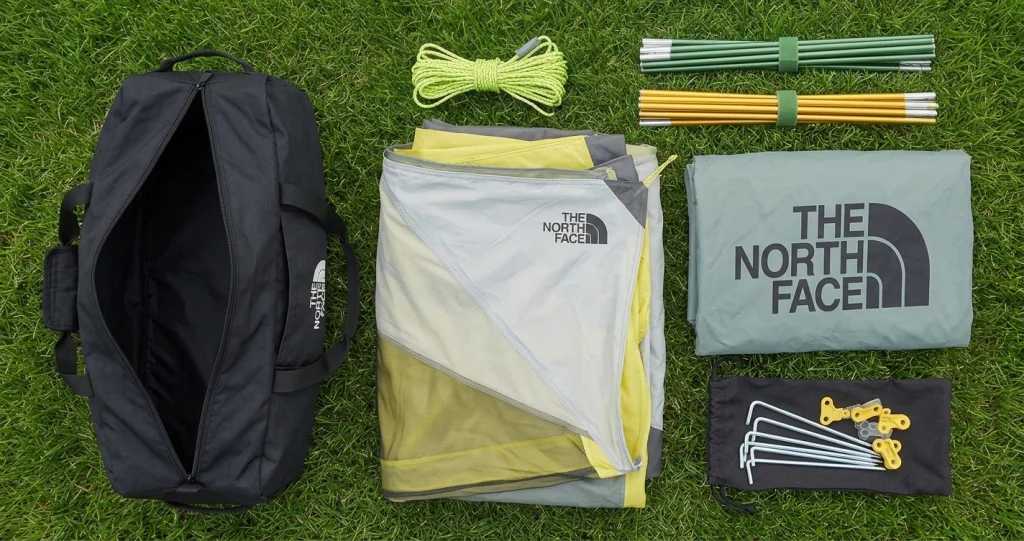
What’s in the Box
- Included: Tent body, rainfly, DAC MX aluminum poles, stakes, reflective guylines, duffel-style carry bag
- Not included: Footprint (sold separately)
The Wawona 4 arrives with everything needed to pitch it, though The North Face sells a matching footprint separately if you’re regularly camping on rougher, more abrasive ground. Given the durable 150-denier floor, a footprint isn’t essential for typical 3-season use.
Setup & Takedown
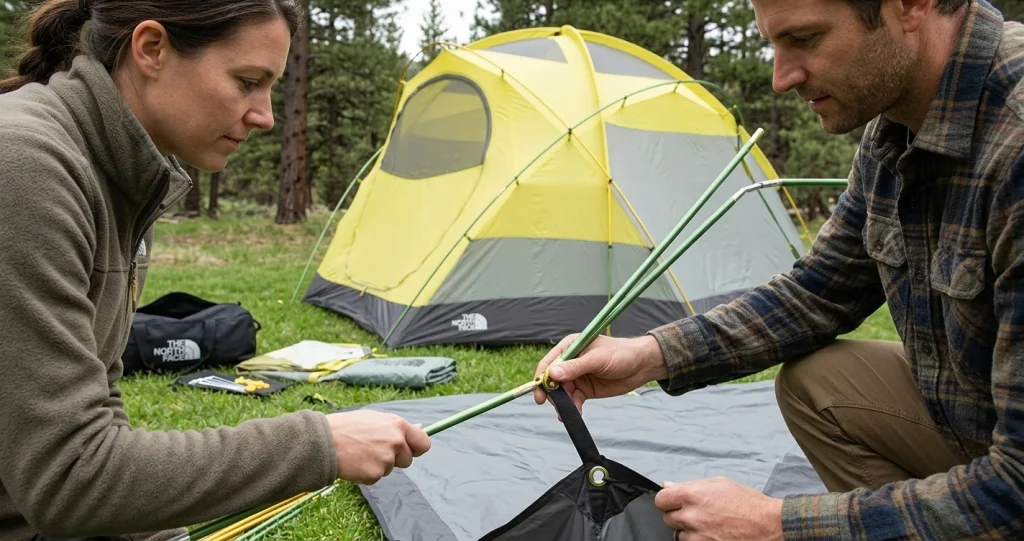
- Pole structure: X-shaped main frame with color-coded poles and trim
- Brow pole: A separate arching pole props open the front door and pulls the sidewalls taut
- Setup time: Roughly 10-15 minutes with two people
The Wawona 4 isn’t an instant-pitch tent, and its size and long poles mean it genuinely benefits from a second pair of hands. That said, the color-coded system keeps the process from feeling confusing the X-shaped structure comes together intuitively, and the arched brow pole over the door is what gives this tent its distinctive tall, open feel once it’s up.
Peak Height & Standing Room
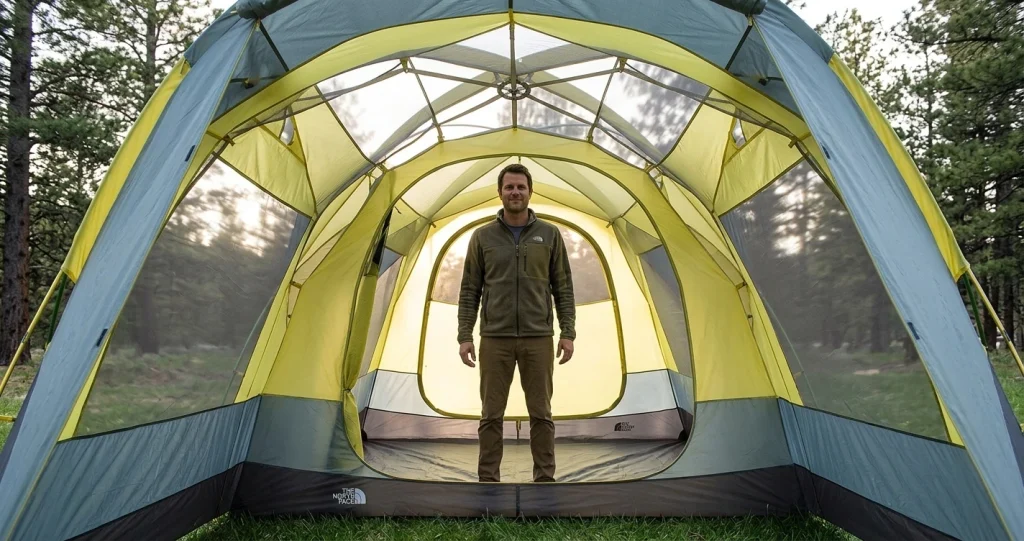
- Ceiling design: Near-vertical walls with an arched brow pole over the front door
- Standing space: Comfortable for most adults near the center and entrance area
The Wawona 4’s near-vertical wall design is one of its strongest features it genuinely creates more usable interior volume than a typical sloped dome tent, and the brow pole over the door specifically pulls the sidewalls up so you’re not ducking every time you walk in. That said, campers close to six feet tall will find they lose the ability to stand fully upright throughout the whole interior, since headroom still tapers as you move away from the peak.
Pro Tip: If standing height and spreading out are non-negotiable for your family, The North Face’s own 6-person Wawona steps up to noticeably more headroom — worth comparing before you commit to the 4P.
Floor Area & Sleeping Capacity
- Floor area: 58.13 sq ft
- Marketed capacity: 4-person (also available in 6P and 8P)
- Realistic fit: Comfortable for two adults, workable for two adults plus a child
At 58.13 square feet, the Wawona 4 offers solid, if not class-leading, interior space. It’s genuinely comfortable for two adults, or two adults with a young child, but four adults with individual sleeping pads and gear will find it a tighter squeeze than tents with a larger floor footprint in the same capacity class.
| Spec | Detail |
|---|---|
| Floor Area | 58.13 sq ft |
| Best Realistic Fit | 2 adults, or 2 adults + 1 child |
Pro Tip: If you’re regularly sleeping four people with full gear, it’s worth comparing floor area against other tents in this capacity class before deciding — the marketed “4-person” number alone doesn’t tell the whole story.
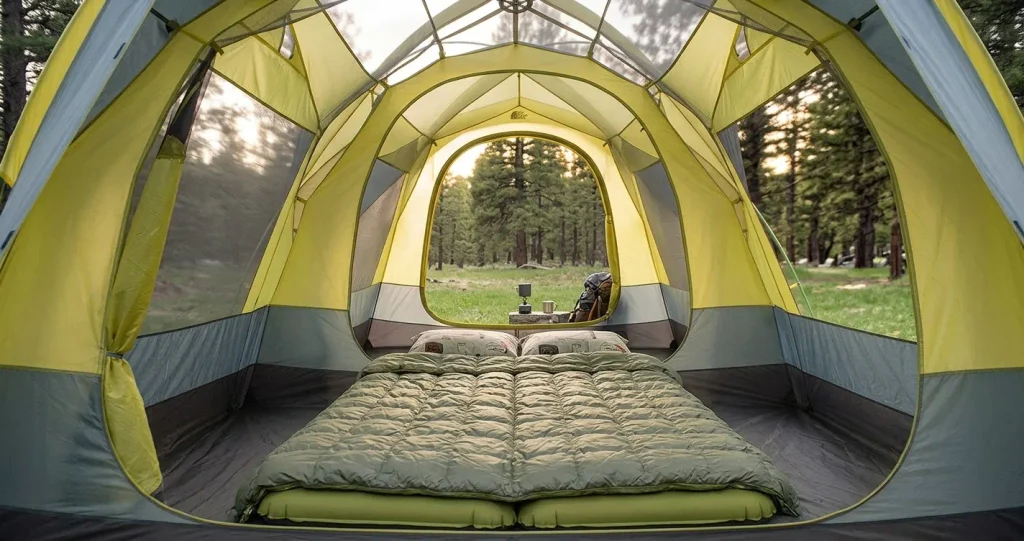
Doors
- Door count: 2
- Front door: Large mesh door held open by the arched brow pole
- Back door: Second entrance for easier access from either side
Having two doors is a genuinely practical detail for a family tents it means whoever’s sleeping closest to the back doesn’t have to climb over everyone else for a middle-of-the-night bathroom trip. The oversized front mesh door doubles as the tent’s main ventilation and view when the rainfly is rolled back.
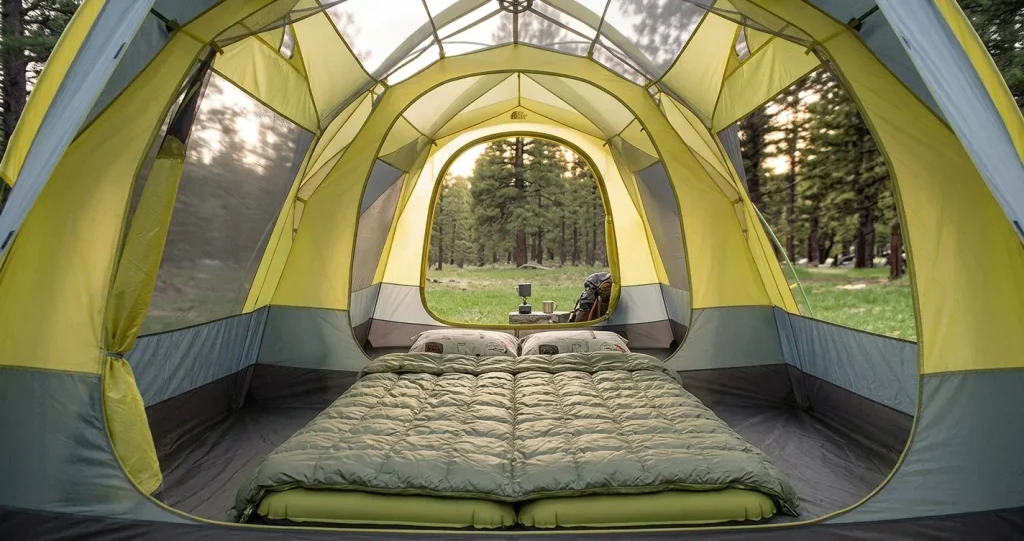
Windows & Mesh
- Coverage: Generous mesh throughout the tent body
- Rainfly rolled up: Creates large open “windows” for stargazing or extra airflow
- Adjustment: Window flaps are adjusted from outside the tent
The Wawona 4’s mesh construction is genuinely generous, and rolling the partial rainfly back opens up large sections of the tent body for a real view of the sky — a nice touch for clear nights. Worth knowing: unlike some competitors with interior toggles, adjusting these window sections means stepping outside, which is a small inconvenience if you’re making frequent changes during shifting weather.
Vestibule / Gear Storage
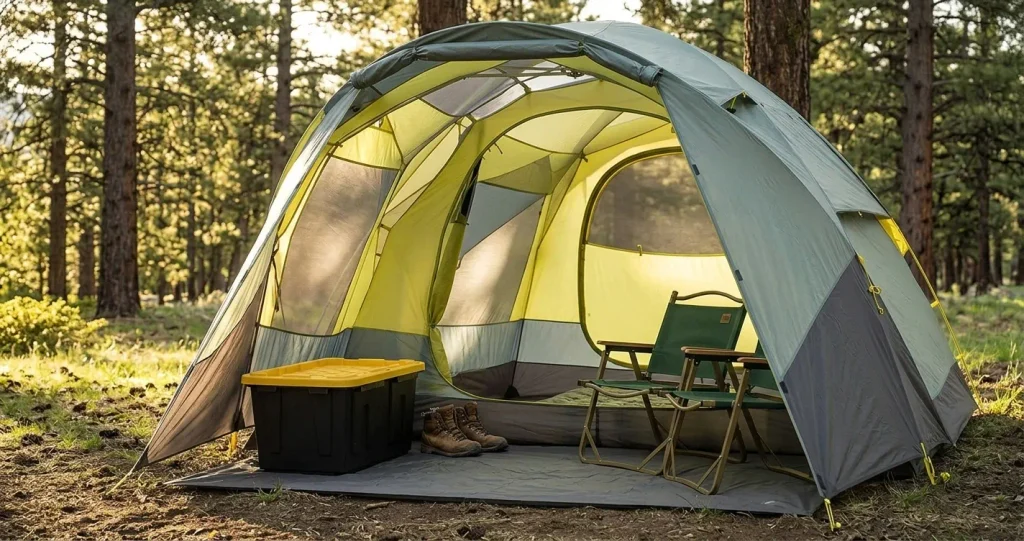
- Vestibule area: 27.6 sq ft
- Coverage: Extended by the brow pole for genuine usable space, not just a narrow overhang
This is one of the Wawona 4’s clearest strengths. A 27.6 sq ft front vestibule is large enough to fit a gear bin or a set of duffels without crowding the tent’s main entrance, keeping wet boots and packs out of the sleeping area entirely. For campers used to the small vestibules on backpacking-style tents, this space feels genuinely utilitarian.
Ventilation
- Mesh door: Large front mesh panel for primary airflow
- Roof vents: Two vents built into the design
Between the large mesh door and two roof vents, the Wawona 4 manages airflow well, which independent testing has reported helps keep interior condensation to a minimum even during periods of rain. The tradeoff with this much mesh, as with most highly-ventilated tents, is reduced warmth retention in cooler conditions.
Rain & Weather Protection
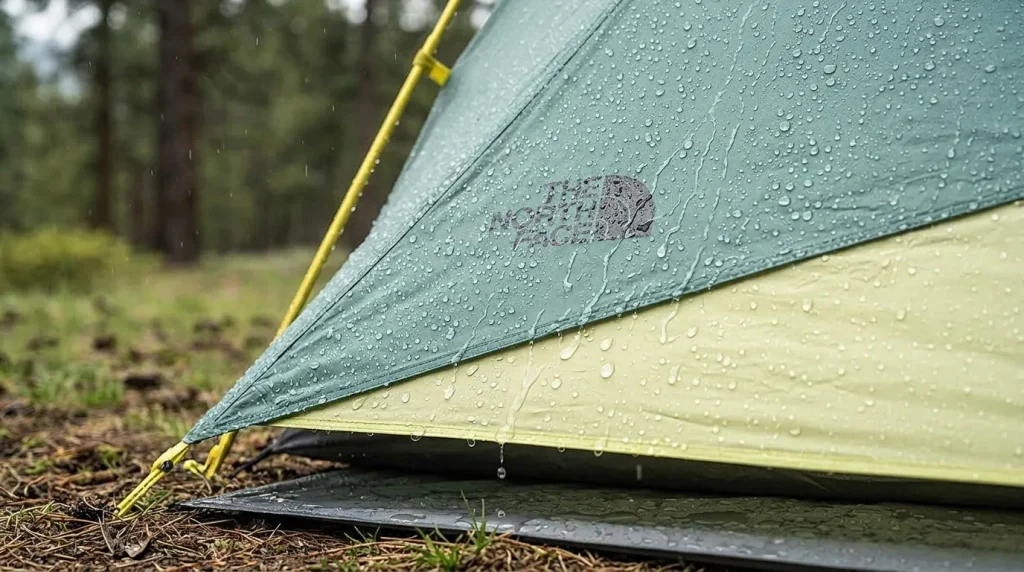
- Design: Hybrid double-wall construction
- Rainfly: Partial coverage, relying on a waterproof tent body across the lower half
- Coating: Non-PFC Durable Water Repellent (DWR) finish
- Note: Made without a flame-retardant coating
The Wawona 4 takes a hybrid approach rather than a traditional full-coverage double-wall design the lower half of the tent body itself is waterproof, working alongside the partial rainfly. This style is generally considered less storm-ready than a full-fly setup, though independent testing in light-to-moderate rain has reported the tent staying dry inside. If you frequently camp in heavier or more unpredictable weather, it’s worth weighing this against fuller-coverage alternatives.
Wind Resistance
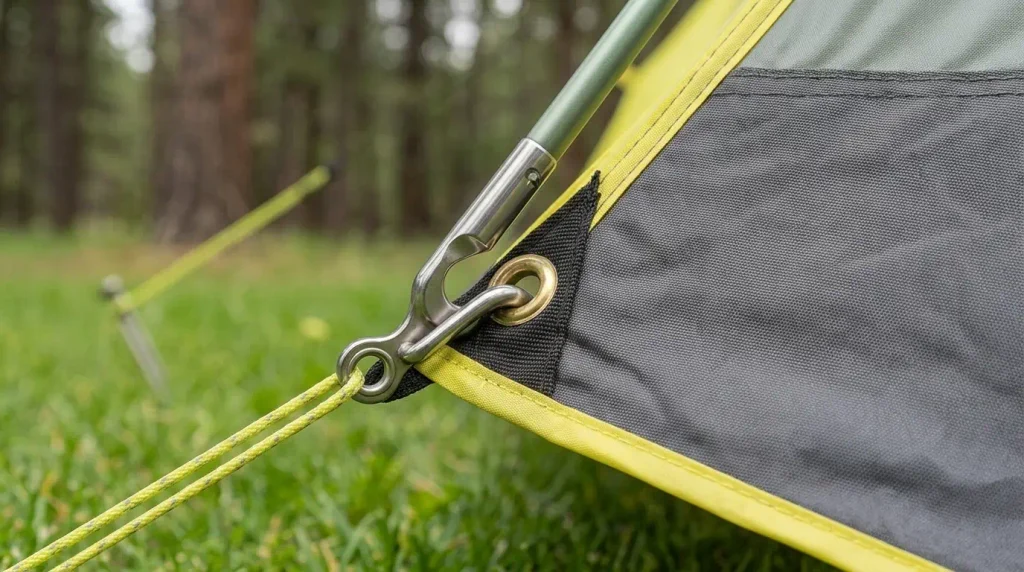
- Guylines: Reflective external guylines for added security
- Shape: Tall, near-vertical profile
Reflective guylines add a genuinely useful safety and stability feature, both for visibility at night and for anchoring the tent in breezier conditions. That said, the same tall, near-vertical profile and partial rainfly coverage that make this tent feel spacious also make it more vulnerable in strong, sustained winds compared to lower, full-coverage dome designs worth keeping in mind for exposed or unpredictable campsites.
Storage Pockets & Gear Loft
- Total pockets: 9
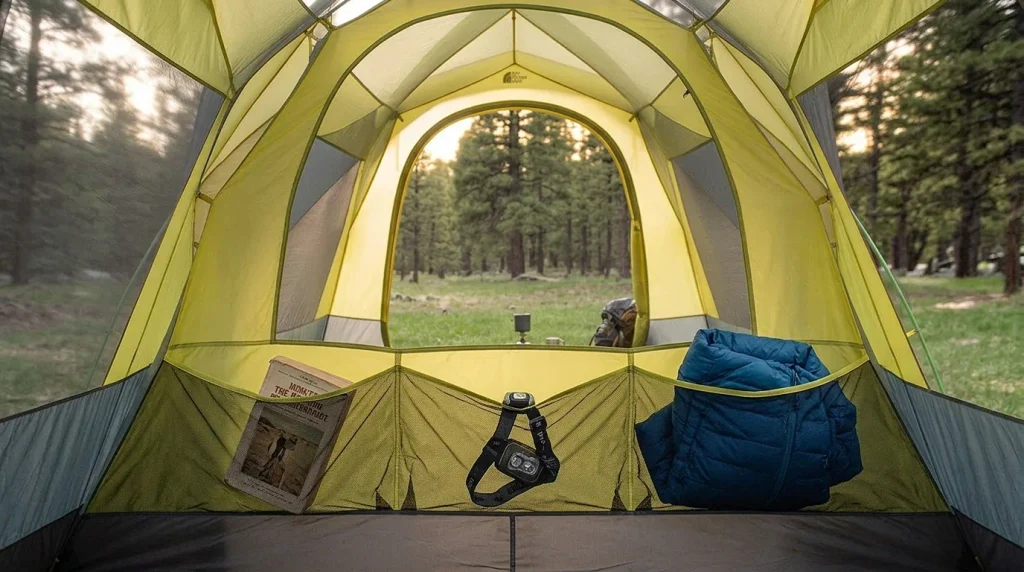
- Back door: Three large mesh pockets for books, headlamps, and extra layers
- Front door: Ceiling pockets for phones, keys, and small essentials
- Ceiling loops: For hanging lanterns
Nine pockets is a genuinely strong amount of interior organization, and the placement is thoughtful mesh pockets along the back door for bulkier items, ceiling pockets near the front door for things you want to grab quickly on your way out. One small caveat: overstuffing the door pockets can make that door a bit harder to zip open and closed.
Build Quality & Materials
- Poles: DAC MX aluminum, described as stronger without a weight penalty
- Canopy: 75-denier polyester
- Floor: 150-denier polyester
The build quality here is genuinely a highlight. DAC poles carry a strong reputation in the outdoor gear world for durability, and the combination of a 75-denier canopy with a heavier 150-denier floor gives the Wawona 4 real resistance to abrasion and wear the kind of construction that independent long-term testing has rated as excellent for durability relative to competing tents in this price range.
Packed Size & Portability
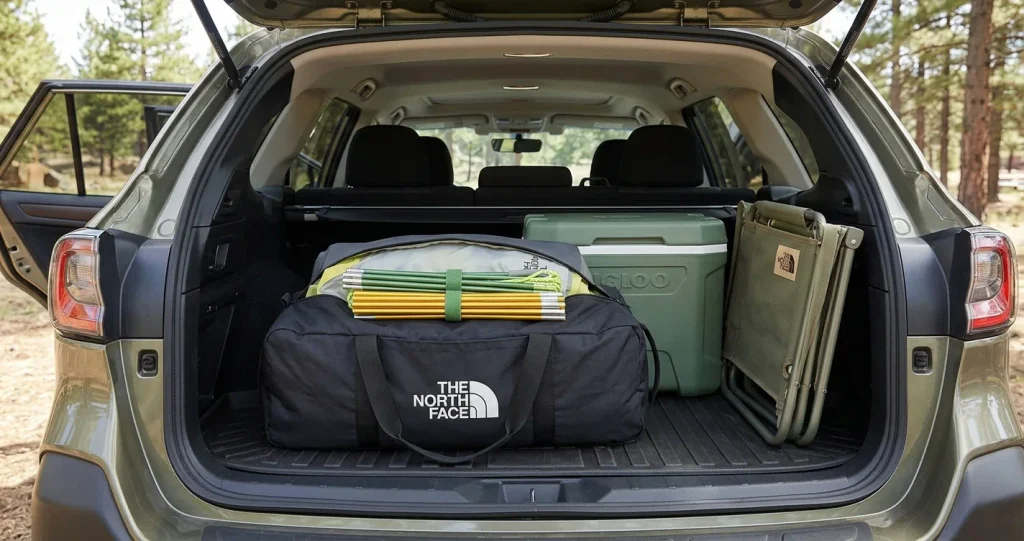
- Total weight: 13 lb
- Trail weight: 11 lb 11 oz
- Packed size: 24 x 9 in
- Carry bag: Duffel-style, top-loading, accommodates imperfect packing
At 13 pounds, the Wawona 4 is a reasonable weight for a car-camping tent with this much build quality and vestibule space. The duffel-style bag is a genuinely practical touch it’s forgiving if you don’t fold the tent perfectly back into its original shape, and the large carry straps make hauling it from car to campsite easier than a tight, structured stuff sack would.
Who This Tent Is (and Isn’t) For
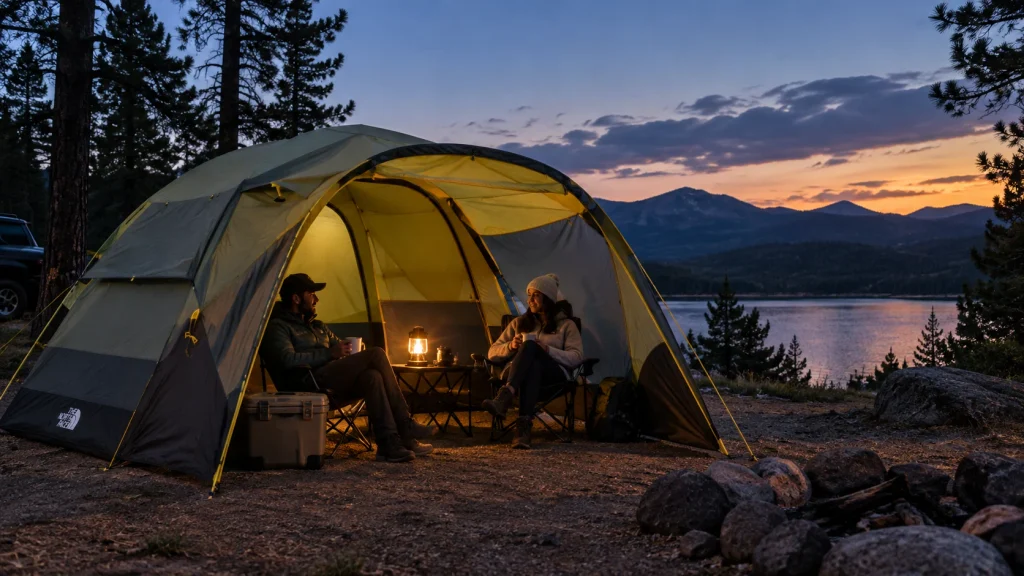
The Wawona 4 is a strong fit for couples or small families who prioritize durability, organization, and vestibule space over maximum standing height or storm-ready protection. It suits fair-to-moderate weather car camping well, and its build quality means it’s genuinely built to hold up over years of regular trips.
It’s a weaker fit if you routinely camp with more than two adults, want to stand fully upright throughout the whole interior, or frequently face rough, unpredictable weather where a full-coverage rainfly matters more. Families in those situations may want to look at the 6-person version of the same tent instead, which offers meaningfully more headroom and a much larger vestibule.
Why Trust This Guide
This review is based on The North Face’s published specifications alongside consistent, independently reported details about the Wawona 4’s real-world floor space, setup process, and weather performance. We’re upfront about where this tent trades some storm protection and headroom for genuinely excellent storage and build quality, rather than only repeating the marketing copy.
Buying Guide: Is the Wawona 4 Right for Your Family?
Match the Size to How You Actually Camp
If two adults, or two adults and a child, make up your typical trip, the 58.13 sq ft floor area works comfortably. Regularly camping with more people points toward the 6-person version instead.
Weigh Vestibule Space Against Full Storm Protection
The Wawona 4’s 27.6 sq ft vestibule is genuinely excellent for gear-heavy campers, but the partial-coverage rainfly is a real tradeoff if you frequently face heavier, less predictable weather.
Factor In Setup With One Person vs Two
The tall profile and long poles make this tent noticeably easier to pitch with a partner. If you’re often setting up solo, budget extra time or consider a simpler design.
Consider Your Climate
Excellent mesh ventilation is a genuine strength in warm weather but means less heat retention in cooler, shoulder-season conditions.
Don’t Overlook Pocket Placement
Nine pockets sounds great on paper, but avoid overstuffing the ones built into the door itself it can make the zipper harder to manage.
Common Mistakes Buyers Make
The most common mistake is buying strictly by the marketed person-count number without checking the actual floor area against what you’re planning to bring inside mattresses, bags, and a duffel add up fast in any tent.
Final Verdict
Among family tents built for durability and smart storage, The North Face Wawona 4 is a genuinely solid choice for couples or small families who camp mostly in fair-to-moderate conditions. The DAC aluminum poles, 150-denier floor, and expansive front vestibule make it a tent built to last, even though it gives up some headroom and full-storm coverage compared to a few class leaders.
As an Amazon Associate, we earn from qualifying purchases.
Frequently Asked Questions
Is The North Face Wawona 4 a good family tents?
Yes, particularly for couples or small families who value durability and storage. Its 58.13 sq ft floor area is comfortable for two adults, or two adults plus a child, though it’s tighter for a full four-person family with gear.
How much vestibule space does the Wawona 4 have?
The front vestibule measures 27.6 sq ft, large enough to store a gear bin or a set of duffels without crowding the tent’s main sleeping area.
Is the Wawona 4 easy to set up?
It’s manageable but not instant. With two people, setup typically takes about 10 to 15 minutes thanks to color-coded poles and an intuitive X-shaped frame, though the tall profile and long poles make it easier with a partner than solo.
Does the Wawona 4 handle rain well?
It uses a hybrid double-wall design with a partial-coverage rainfly rather than full coverage. Independent testing in light-to-moderate rain has reported it staying dry inside, though it’s less storm-ready than tents with full-coverage rainflies.
Can you stand up inside the Wawona 4?
Most adults can stand comfortably near the front entrance thanks to the arched brow pole, but those close to six feet tall will lose the ability to stand fully upright throughout the rest of the interior.
How much does The North Face Wawona 4 weigh?
It has a total weight of 13 pounds and a trail weight of 11 pounds 11 ounces, which is reasonable for a car-camping tent with this level of build quality and storage.
Does the Wawona 4 come in other sizes?
Yes. It’s also available in 6-person and 8-person capacities, both of which offer more headroom and a significantly larger vestibule for families who need more space.